Best Written
Attack on Titan
Characters
We put 20 Attack on Titan characters through a full head-to-head bracket using Sortoff — no gut-feeling top 10, no drag-and-drop bias. Every position was decided by direct comparison across three criteria: arc (how well-crafted the character's writing is), weight (how much they carry the story), and satisfaction (how rewarding it is to follow them). This is not a popularity ranking.
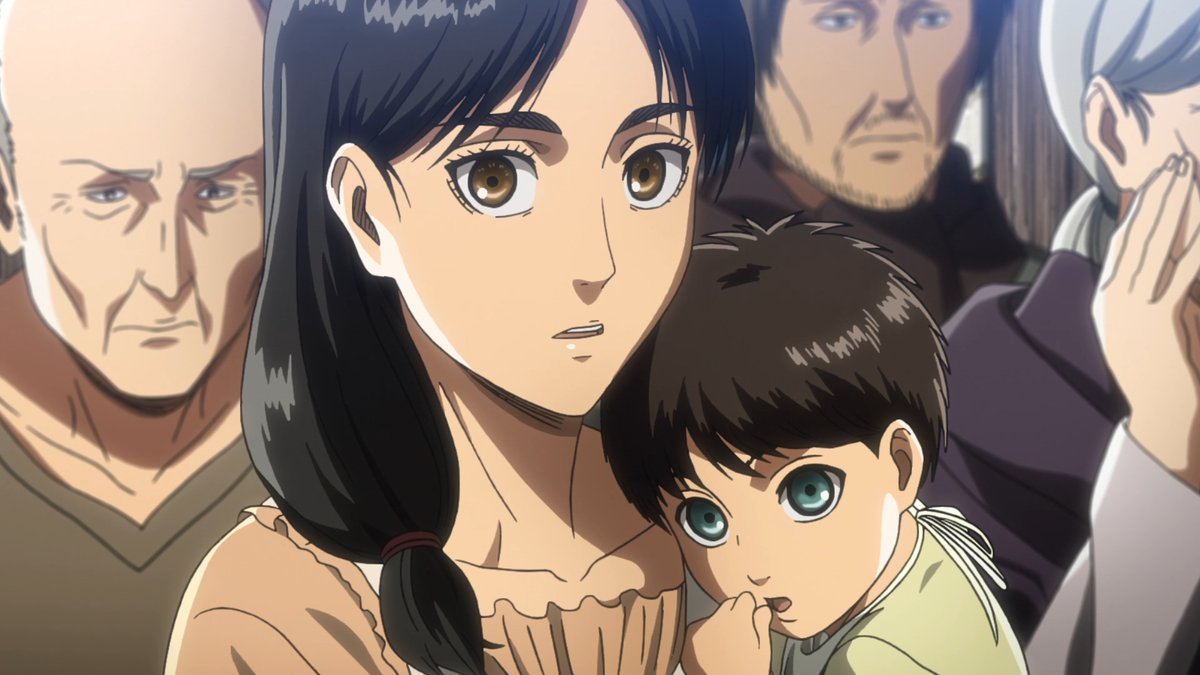
Carla appears very little. She dies in the first episode. And yet the series never treats her as a prop — it treats her as the emotional anchor of everything that follows.
What Isayama does with Carla is precise and economical: in just a few minutes, he establishes a woman who loves her children without idolizing them, who fears for her life but doesn't turn that fear into hatred, and who dies asking her children to live rather than to avenge her. She is the direct opposite of Grisha, and that contrast is intentional. Carla represents what Eren could have become had that influence shaped him instead of his father's. The series never forgets that — her death isn't just the trigger for Eren's rage, it's the loss of the only model for how to break the cycle without perpetuating it.
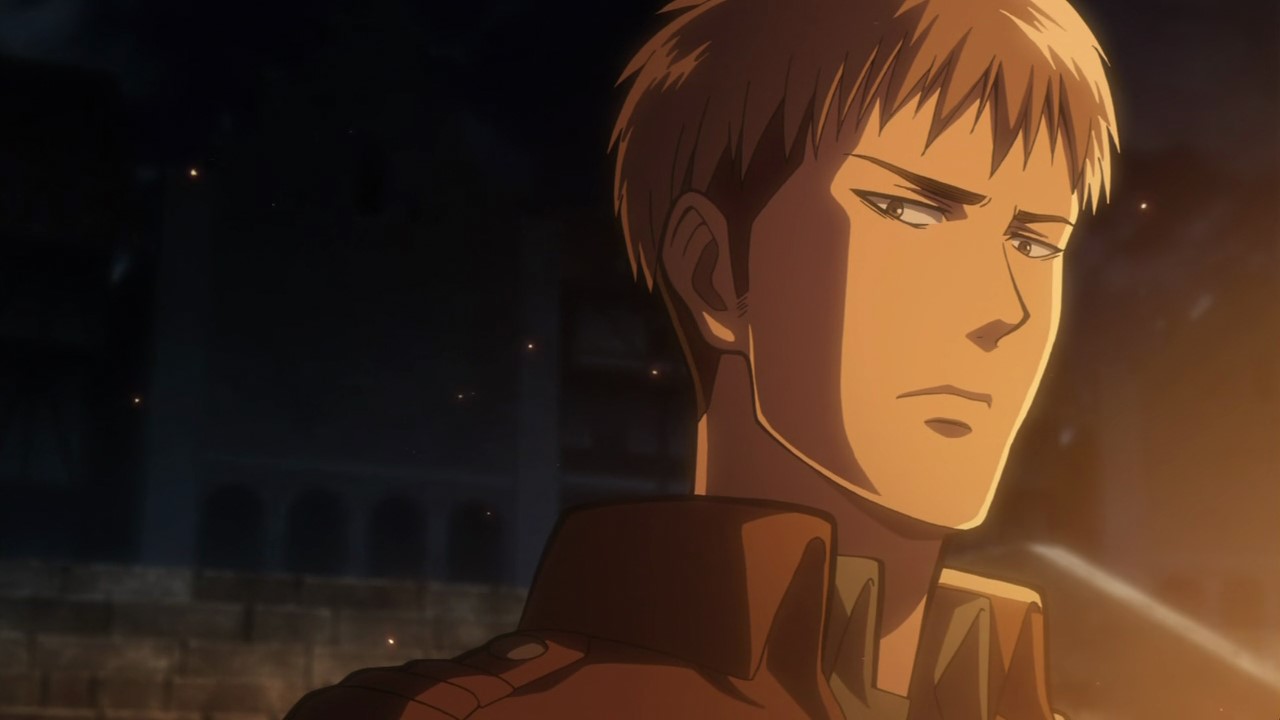
Jean is the character who says what everyone else is thinking but won't say out loud. He enters the series as the cynical realist — wants the safety of the Military Police, wants to survive, has no interest in heroism. And then he keeps getting pulled into heroism anyway.
His value in the narrative is that he functions as the reader's moral compass. When Jean accepts something, the audience accepts it. When Jean resists, the audience questions it. Isayama uses him to calibrate reader reaction throughout the entire story — and does it without Jean ever feeling like a device. He stays a person with his own fears, his own motivations, and a genuine arc from functional egoist to reluctant but real leader.
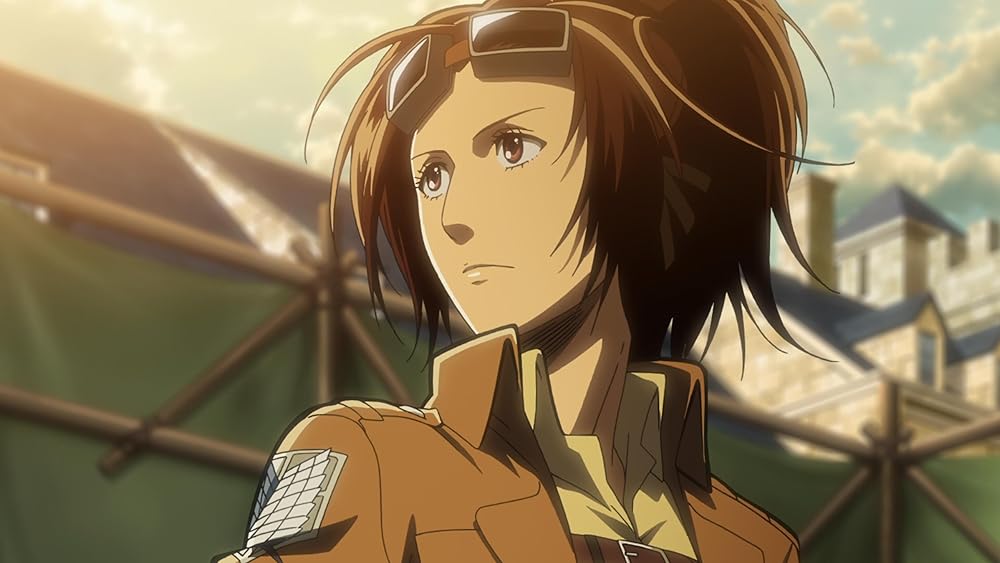
Hange is the Survey Corps' scientist — and eventually Erwin's successor as commander. Their obsession with Titans verged on comedic early on, and that was entirely deliberate. Isayama used that energy to set up a much harder pivot.
Hange functions as the character who preserves the Survey Corps' humanity — the curiosity, the refusal to dehumanize the enemy, the constant drive to find solutions that don't require more bloodshed. When they finally reach a position of power, they discover those qualities aren't enough to govern a world in free fall. Their final arc is about the cost of trying to stay reasonable when everyone around you has already given up on reason. The death is fitting — chosen, deliberate, and entirely consistent with who Hange always was.
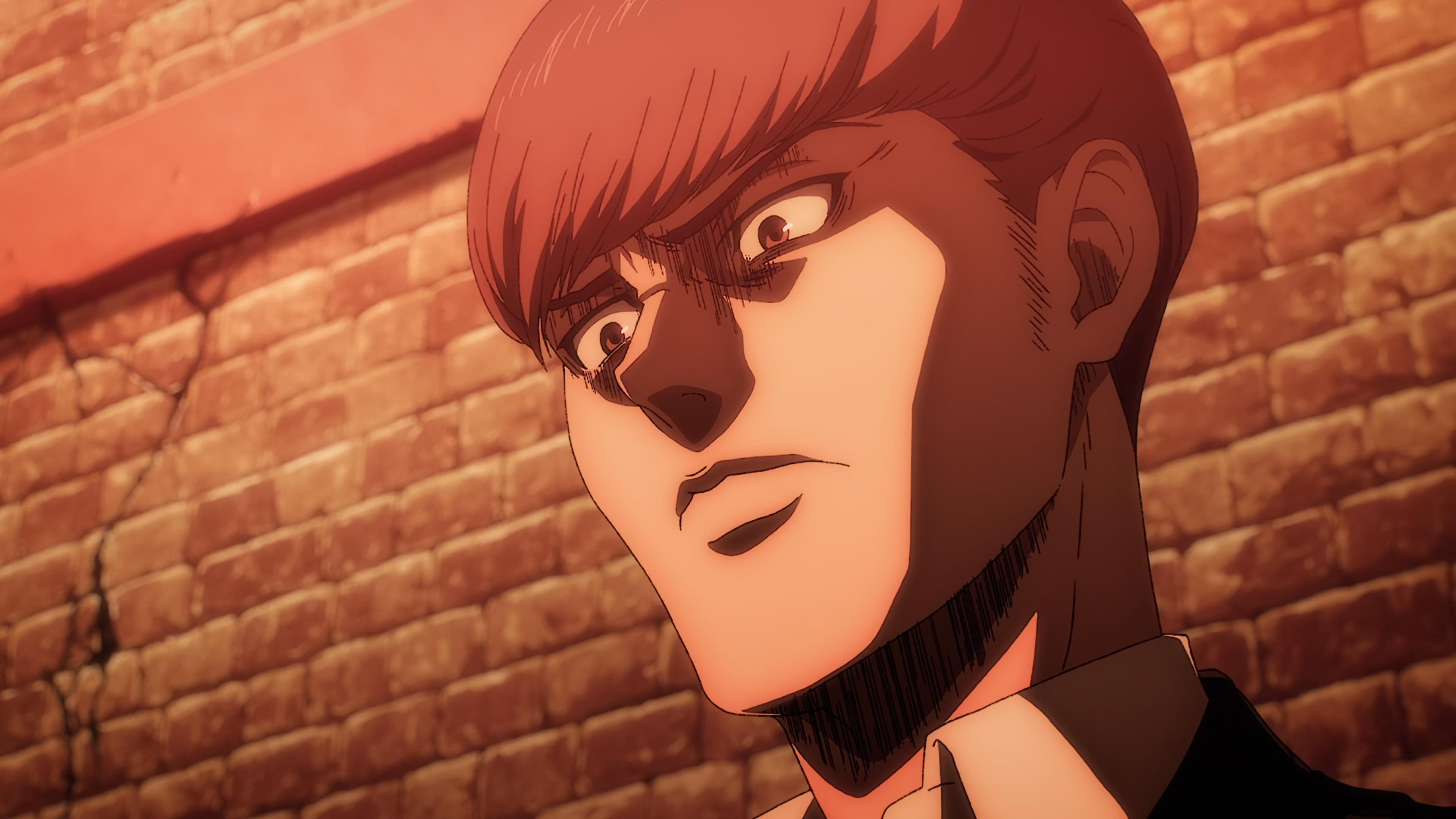
Floch starts as the soldier who survived by luck when better people died around him, carrying the guilt of not deserving to still be alive. He ends as the face of Jaegerism — the movement that justifies genocide in the name of Paradis' survival.
What makes Floch interesting is that his transformation makes sense step by step. There's no single moment of villainy — there's a series of small choices, each one justifiable in context, that take him somewhere monstrous. Isayama uses him to show how extremist movements are built out of ordinary people. Floch wasn't special. He was someone who needed a cause to make survival feel meaningful, and he found one. That's more unsettling than any conventional villain origin.
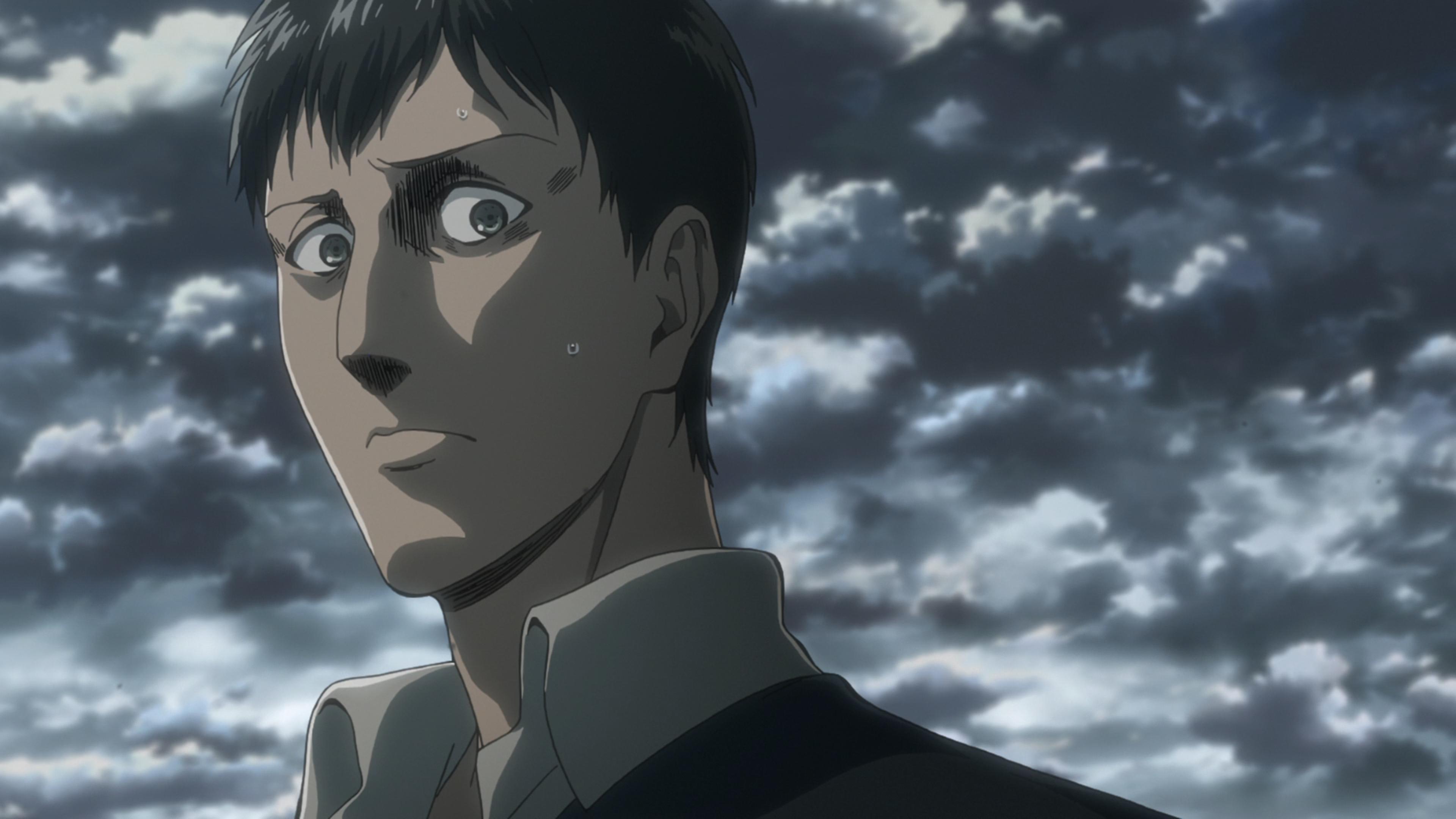
Bertholdt is the Colossal Titan — responsible for the fall of Wall Maria, for the inciting event of the entire series. He's also the most passive major character in the cast, which for a long time looked like weak writing. It isn't.
Bertholdt is the portrait of someone who never wanted to be what he is. He doesn't have Reiner's dissociation or Annie's conviction — he has a quiet loyalty to two people and an inability to oppose what they decide. His confession to Armin before dying is revealing: he doesn't defend the mission, doesn't justify the deaths. He simply says there was no other way. That's the honesty of someone who never truly believed in anything except the people beside him.
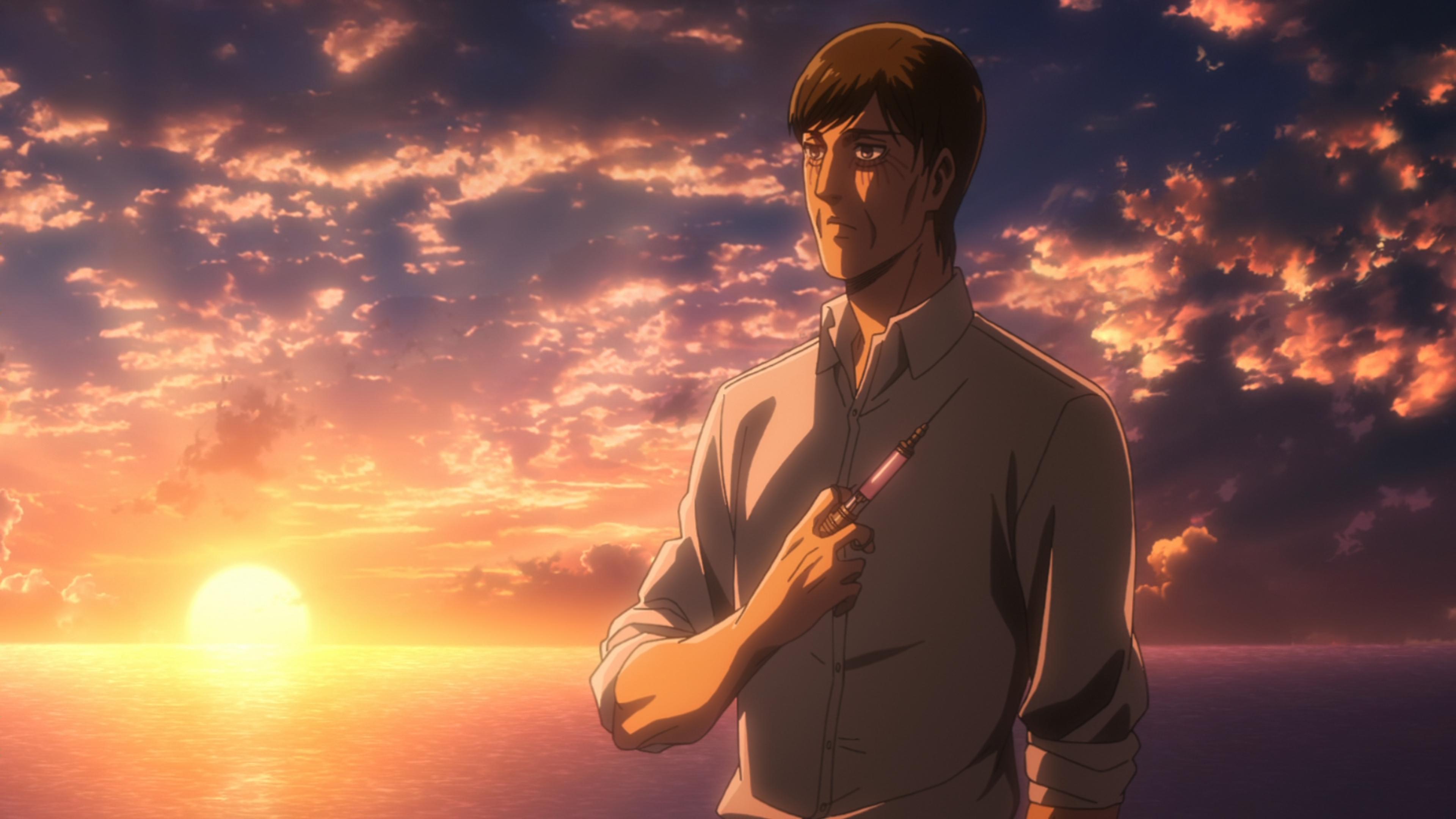
Kruger — the real Owl — is a double agent who spent decades embedded inside Marley to serve the Eldians of Paradis. He appears in a single arc, in flashback, and still leaves an impact disproportionate to his screen time.
What makes him memorable is the scene where he passes the Attack Titan to Grisha. Kruger lived a lie for twenty years, watched generations of Eldians destroyed, and in the end has one instruction and one line he can't rationally explain — "save Mikasa and Armin." Names he shouldn't know. It's the moment the series quietly reveals its own temporal architecture, and Kruger is the perfect vehicle for it: a man who carried a weight he didn't fully understand, but carried it anyway.
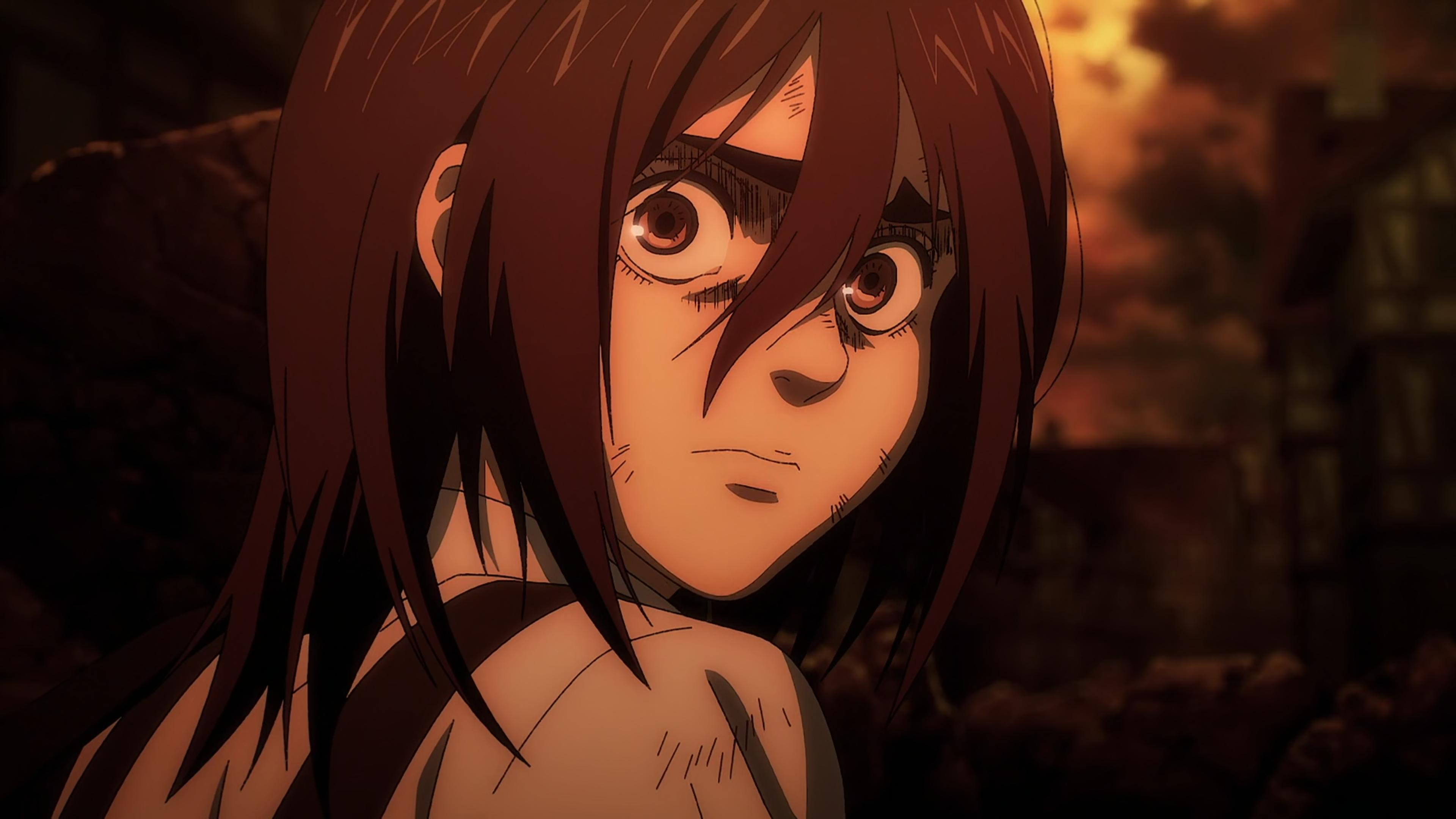
Gabi is Reiner's cousin, a Warrior candidate, and the most divisive character in the series — which is exactly the point.
Isayama built Gabi to be Eren at age twelve: fanatical, certain, willing to kill for a cause handed to her before she was old enough to question it. The audience's reaction to Gabi — the anger many felt toward her — is the series holding up a mirror. Everyone rooted for Eren when he was exactly like this. Gabi is the test to find out whether that support was for the character or for the cause. Her arc inside the Walls is about the slow collapse of that certainty when she's confronted with the real humanity on the other side. It's not quick, it's not clean, and it's not complete — which makes it more honest.
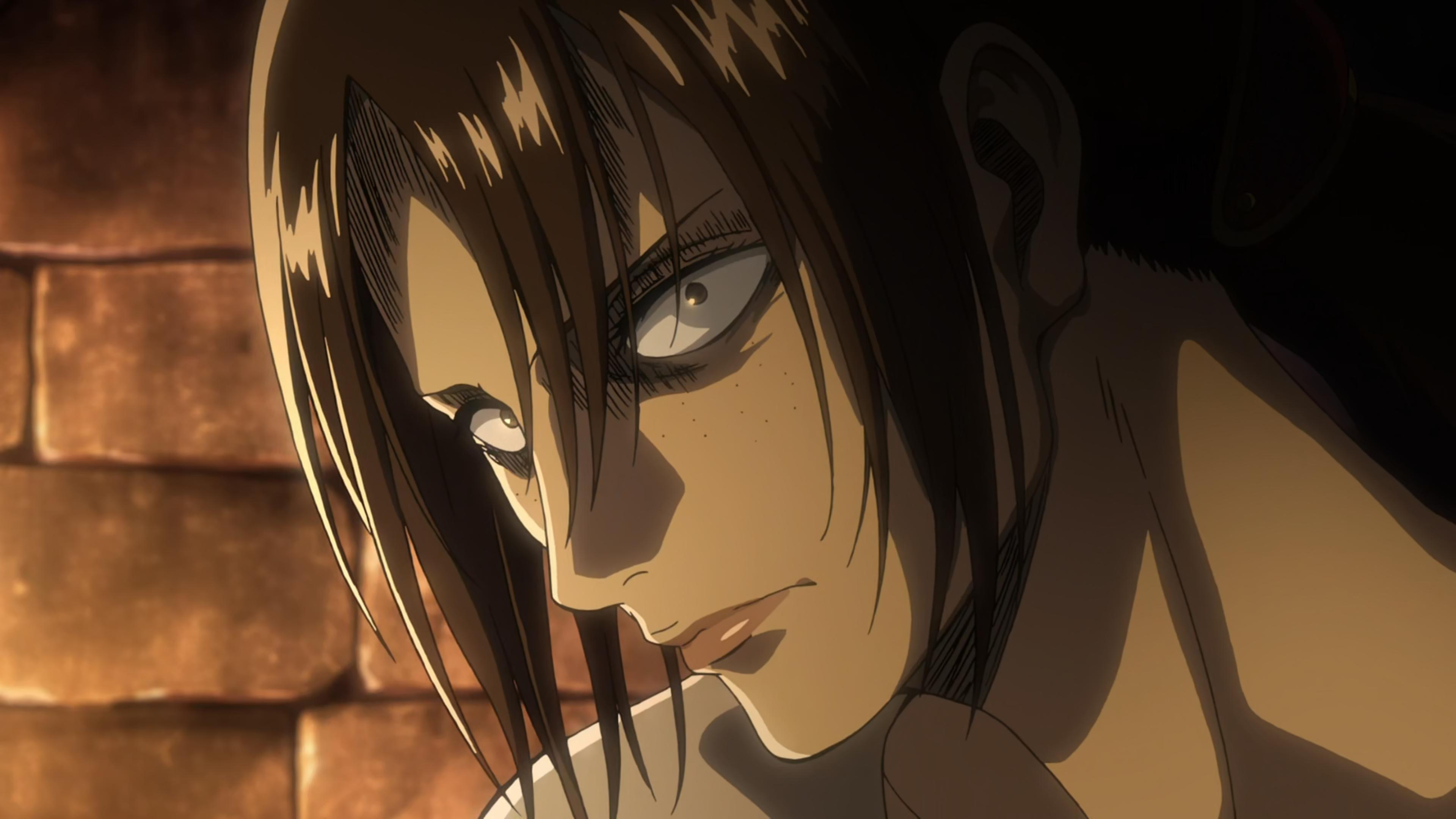
Ymir is the Jaw Titan's host and one of the most deliberately enigmatic characters in the series. An orphan, a survivor, someone who spent years pretending to be someone else before she even had a name of her own.
What makes Ymir well-written is the clarity with which Isayama defines her core motivation: she lives for herself, in a series where nearly everyone lives for a cause. No ideology, no mission — just Historia, and the conscious decision to protect that one person even if it costs her everything. Her exit from the series is voluntary and tragic for exactly that reason. Ymir makes the most selfish and most selfless choice at the same time, and the series doesn't try to resolve the contradiction.
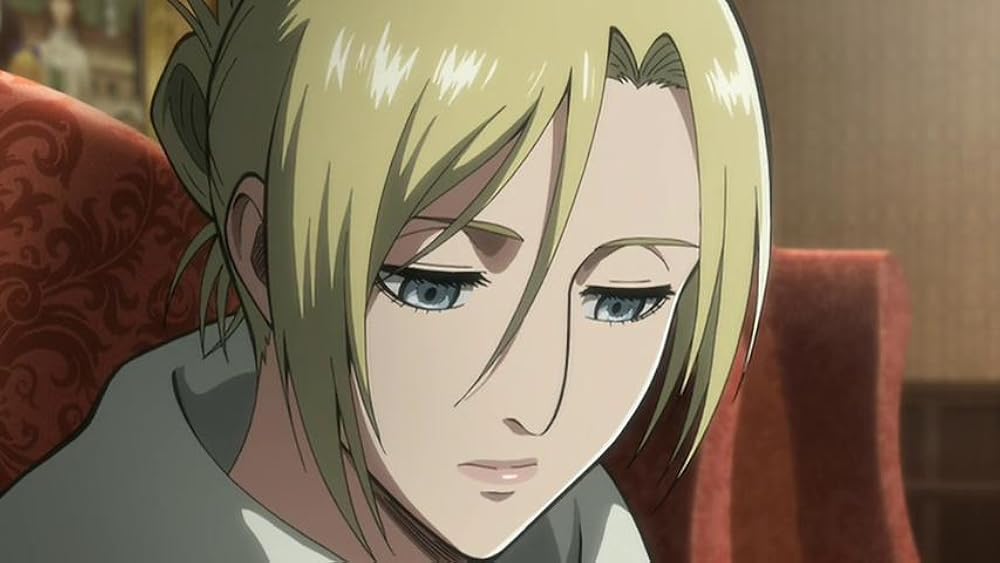
Annie is the Female Titan — a Marleyan warrior sent to infiltrate the Walls and recover the Founding Titan. Cold, calculated, efficient. At first glance she reads as a competent antagonist and not much else.
What makes her well-written is what lives underneath that. Annie doesn't believe in anything. Not Marley, not the Eldians, not the mission. The only thing that moves her is her father — an absent, flawed figure she protects as though he's the one real thing in a world of lies. That contradiction is her core: someone who acts with total conviction in service of a loyalty she can't rationally justify. The crystal isn't a defeat — it's a choice. Annie stops fighting because at that moment she realizes there's nothing worth defending except staying alive long enough to one day go back to him. It's one of the most honest decisions any character makes in the series.
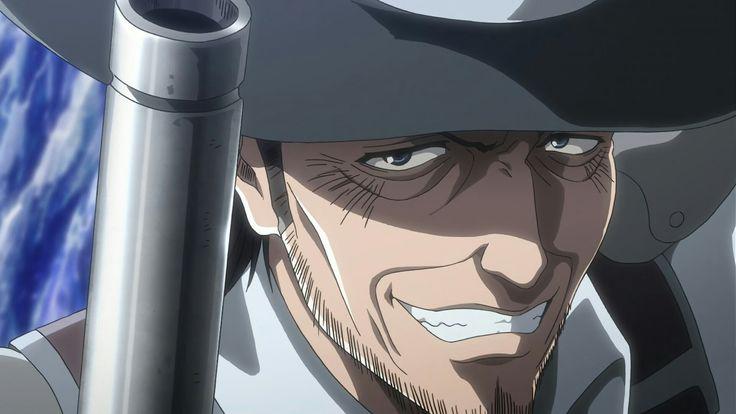
Kenny is the leader of the Interior Police's anti-personnel squad and a legendary killer who rose to become Rod Reiss's right hand. To anyone who only skims him, he's the arc villain — brutal, sardonic, hard to place morally.
What makes him remarkable is that Kenny is the version of Levi who never had the Survey Corps. Same upbringing, same hardness, but no cause to anchor him. So he spent his entire life chasing power — not out of political ambition, but because a man with nothing needs something that makes him feel like he controls something. His death scene is one of the best in the series. Kenny dies laughing, refusing the serum, with a rare kind of self-awareness: "everyone's a slave to something." Not redeemed, not condemned — just human. Isayama didn't try to make him sympathetic at the end. He just let him be exactly who he always was. That was enough.
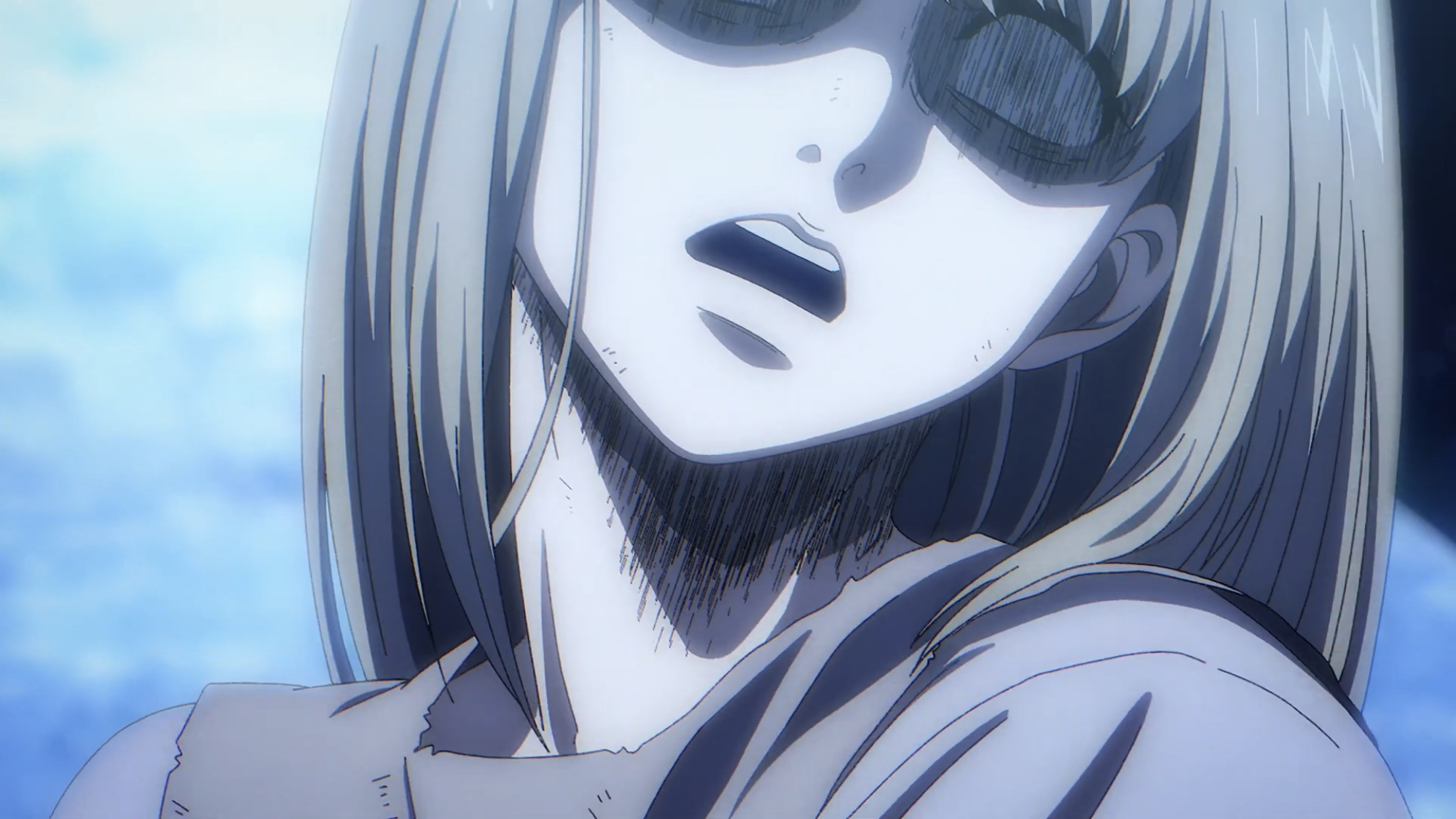
Ymir Fritz is the origin of everything — the first Titan, the slave who received the power two thousand years ago and has since then sustained all nine Titans in existence, trapped in a plane between life and death, obeying the king who subjugated her.
She barely appears. She has almost no dialogue. And yet she's the most tragically constructed character in the series, because her story is a mirror of everything that happens in the narrative — blind obedience born from trauma, love misdirected toward the person who destroyed you, an inability to break free not from lack of strength but from lack of anyone who ever told her she could. Her resolution in the final act only works because Isayama built her throughout the series as an absence with weight. When she finally acts, no explanation is needed. You already understand.
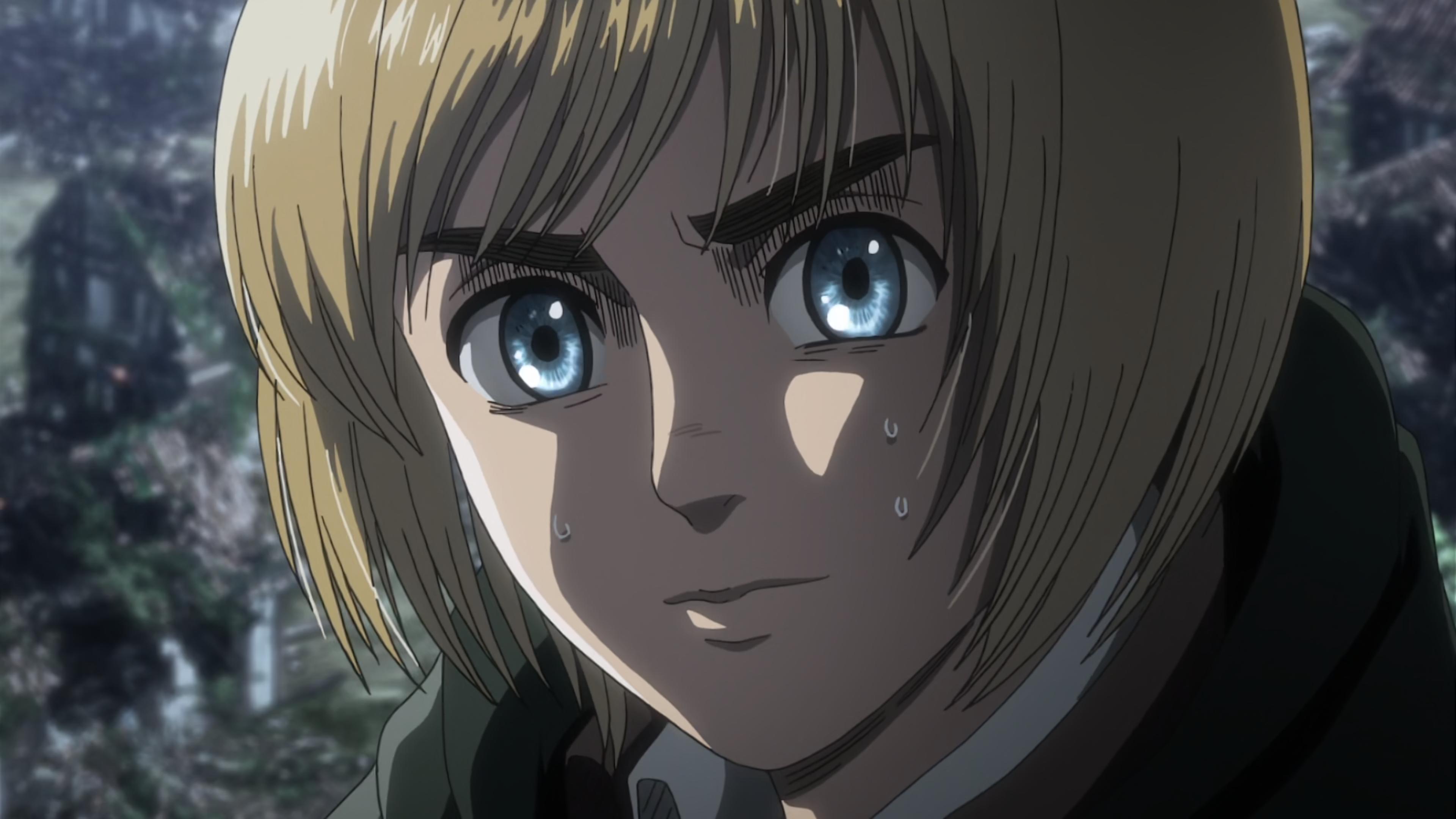
Armin starts as the weak kid who survives because others protect him. He ends as the man who saved humanity through a conversation. That's his arc, and it's executed with a rare kind of consistency.
What defines Armin as a well-written character is that his power never changes in nature — it's always the ability to understand what the other side wants. Not cold strategy, not manipulation, but genuine empathy applied to impossible situations. With Annie. With Bertholdt. With Eren at the end. Armin doesn't win by being smarter — he wins by being the only one willing to see the enemy as a person. The weight of that compounds as the series progresses. Every one of Armin's victories costs something, and the fact that he carries those costs without denying them is what separates him from simply being "the strategist of the group."
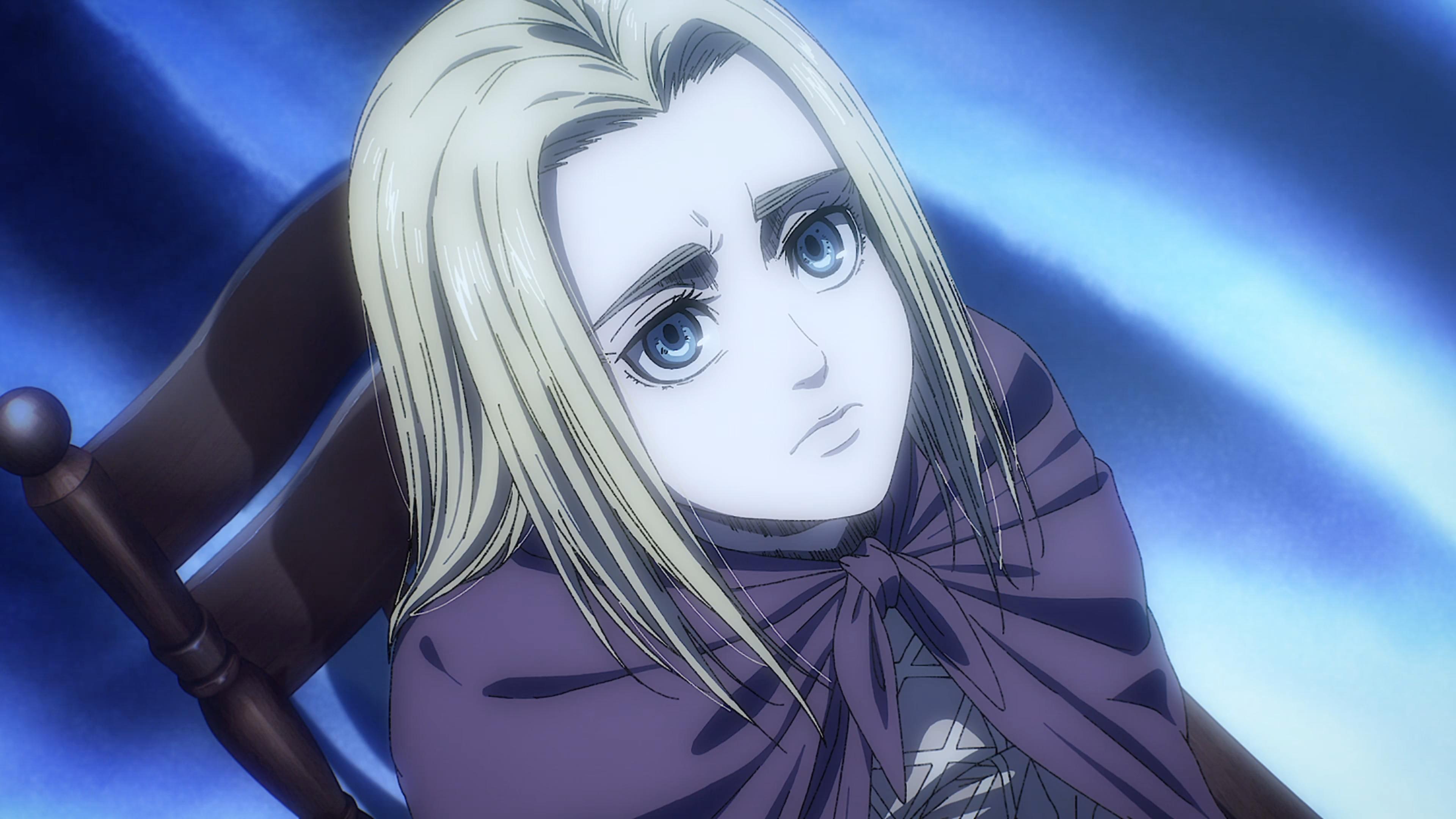
Historia spends half the series pretending to be someone else. Literally — "Christa Lenz" is a constructed identity built for survival, a version of herself that pleases everyone and threatens no one.
Her arc is about the cost of living for other people's approval, and Isayama takes that seriously. Historia doesn't have a dramatic revelation where she suddenly embraces who she is — she has a slow, painful process of realizing that her definition of "being a good person" was always decided by whoever wanted her manageable. The moment she refuses to kill her father — and then stops someone else from killing him, not out of love but out of her own choice — is the turning point. After that, Historia acts for herself. She has the most complete identity arc in the series, and one of the most underrated.
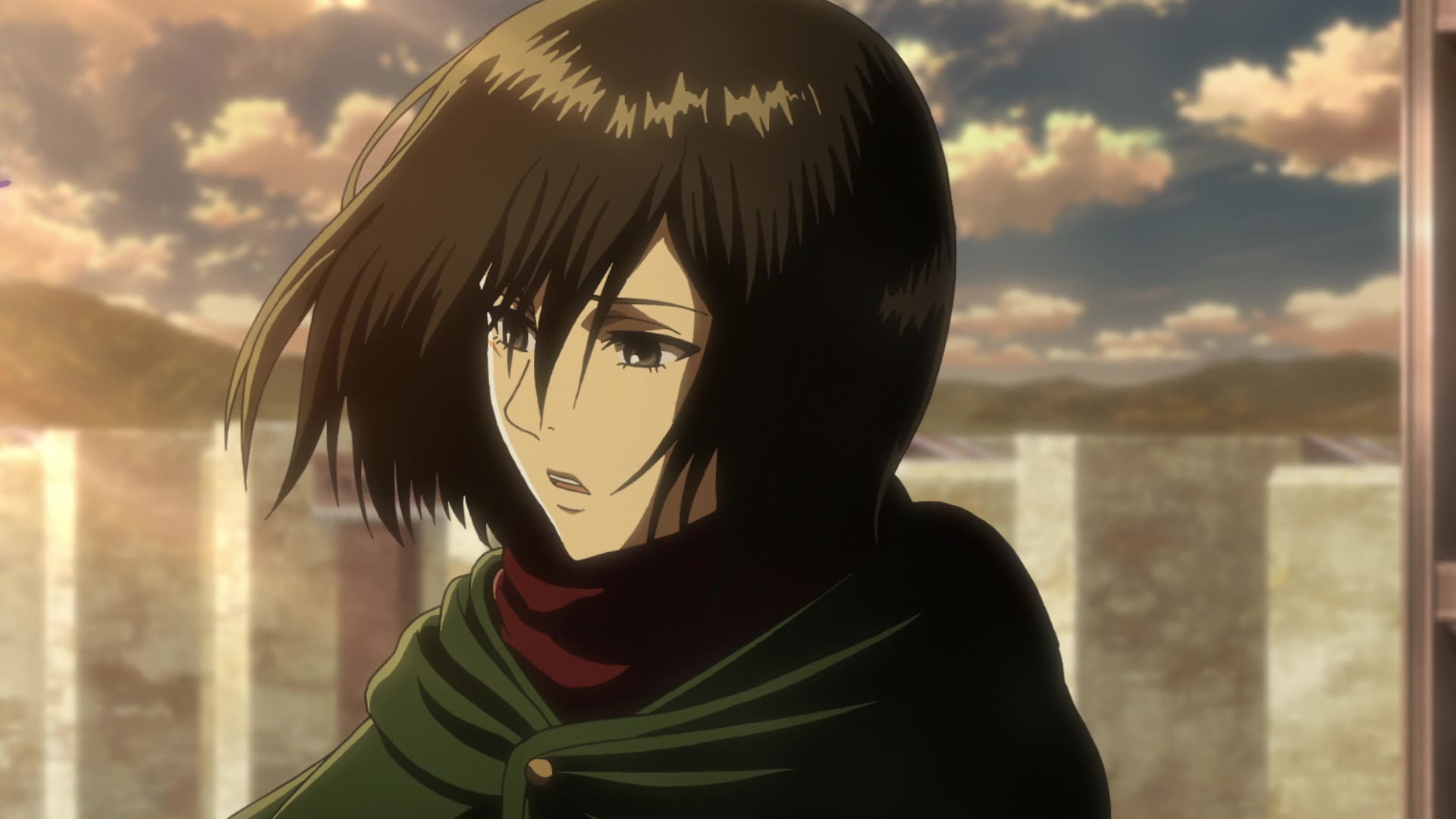
Mikasa is often reduced to her devotion to Eren, which is a shallow reading of what Isayama actually built.
The central question of Mikasa isn't love — it's identity. She lost everything at eight years old and rebuilt herself around a single person. Not because she's weak, but because in a world where everything can disappear in an instant, she chose a fixed point. The problem is that fixed point grew, changed, and eventually became something she didn't recognize. Mikasa's ending is the most courageous thing in the series for anyone who understands what Isayama was saying. Killing Eren isn't a betrayal — it's the only truly free act she ever performed. For the first time, she acts against the fixed point that defined her entire life. It's devastating precisely because it's liberating.
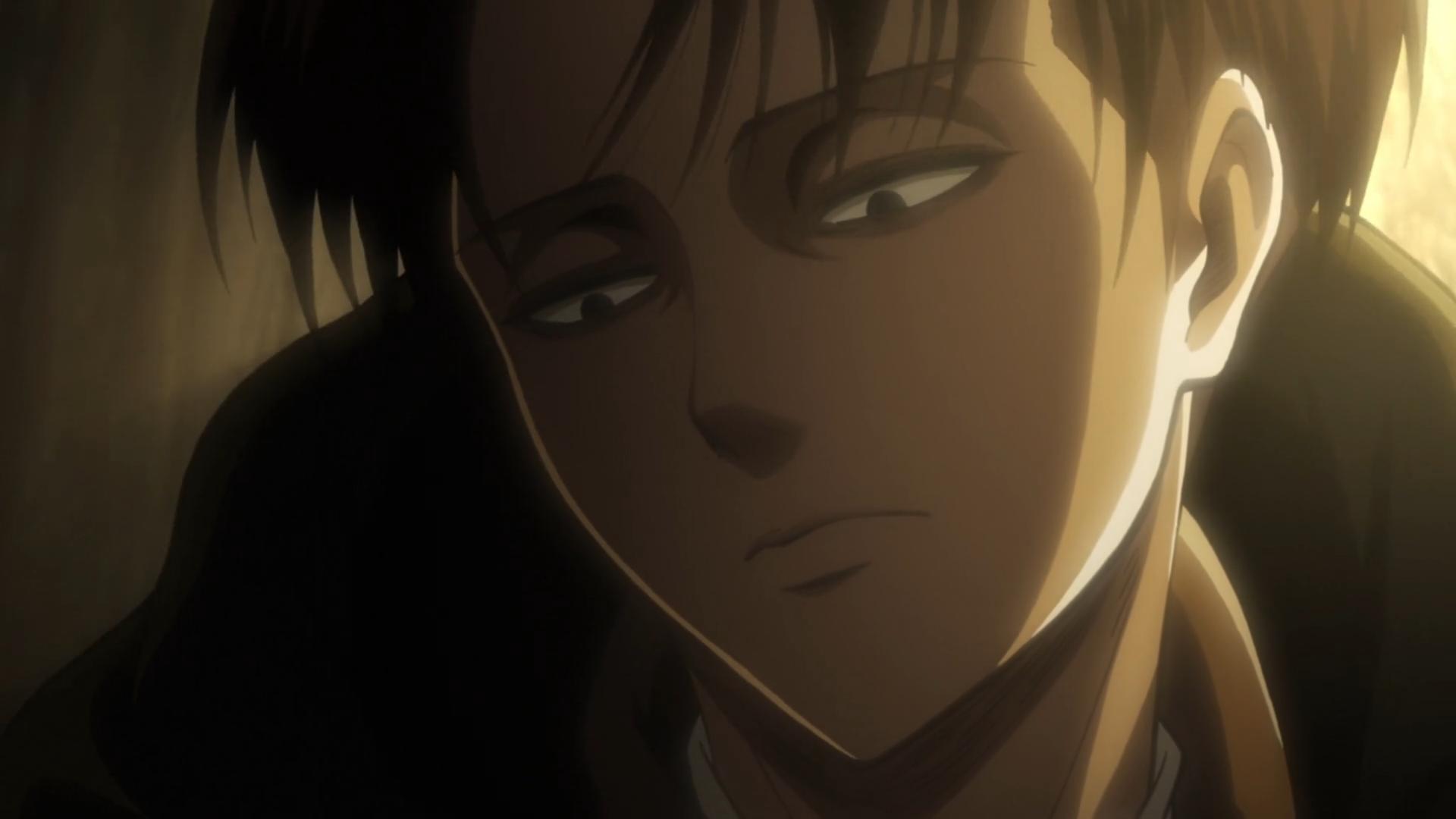
Levi is humanity's strongest soldier, and Isayama uses that deliberately to subvert what that archetype usually means.
In almost any other series, "the strongest" is a power fantasy — invincible, cool, solving problems through force. Levi is the opposite. He's the character who loses what matters most more times than anyone else, precisely because he's always at the front. He loses his squad. He loses Erwin. He loses the ability to fight. Strength protects him from nothing that actually counts. What makes him well-written is the absence of self-pity in how he carries all of that. Levi doesn't grieve loudly, doesn't monologue about trauma — he just continues. That restraint isn't shallowness; it's the only way he found to keep functioning in a world where caring about someone means watching them die.
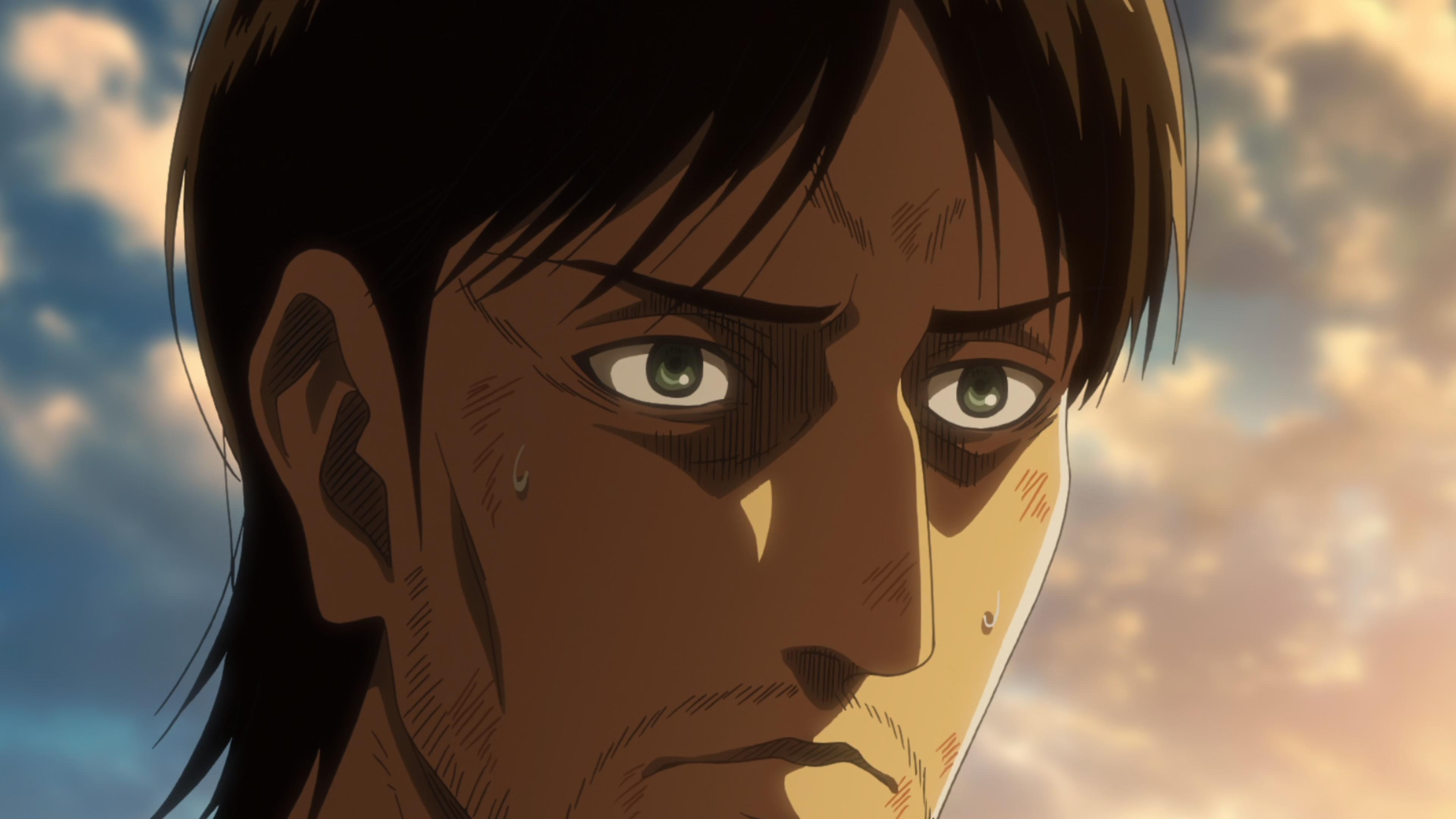
Grisha is the character the series uses to show how cycles of hatred sustain themselves — and it does it in a way that's genuinely uncomfortable, because Grisha isn't evil. He's a father who loved his children, a doctor who saved lives, a man who suffered real injustice. And he still caused irreparable harm to everyone around him.
His arc is built in retrospect, which amplifies everything. By the time you understand what he did to Eren — not just what he passed on, but what he asked of him, knowing what he knew — the series changes shape entirely. Grisha knew the future and still repeated the mistakes of his past, because the weight of what he wanted to avenge was stronger than his awareness of what he was creating. He's the character who best represents the show's central argument: that people who've suffered injustice don't automatically become free of perpetuating it.
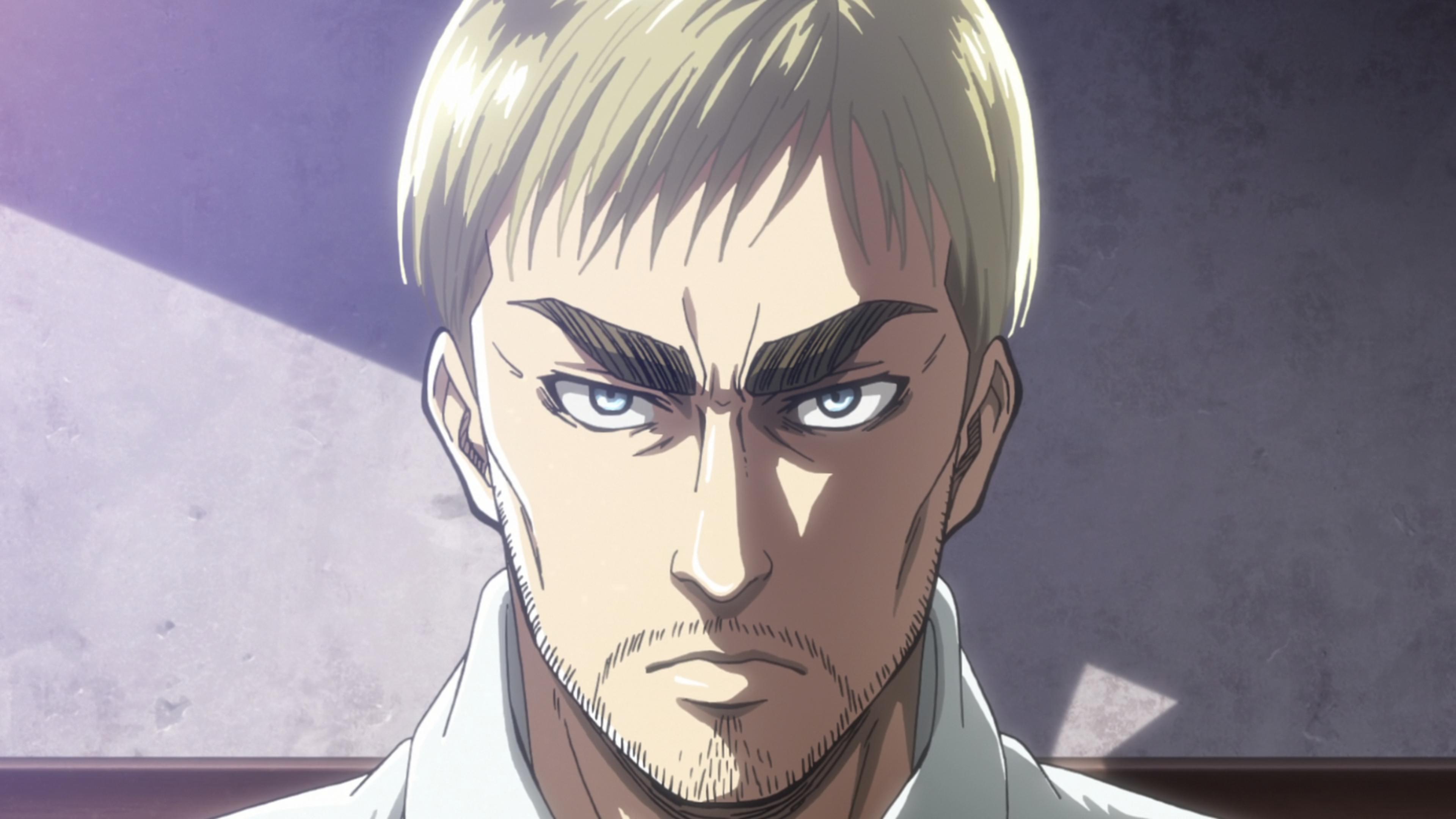
Erwin is the Survey Corps commander — the man responsible for leading humanity against the Titans. On the surface he's the charismatic leader, the brilliant strategist, morally ambiguous in his methods but correct in his aims.
What elevates him is a single question Isayama never directly answers: does Erwin actually believe what he says, or is he using the mission to justify a personal obsession? The dream about his father's theory, the movement he built around a private doubt that no one else shared — all of it is left open. His death resolves it masterfully. Erwin doesn't get the serum. Levi chooses Armin, and Erwin dies as a human being — not as a legend, not redeemed, not confirmed. The question stays unanswered, and that is the answer. Erwin was great and flawed at the same time, and the series had the courage not to resolve that tension.
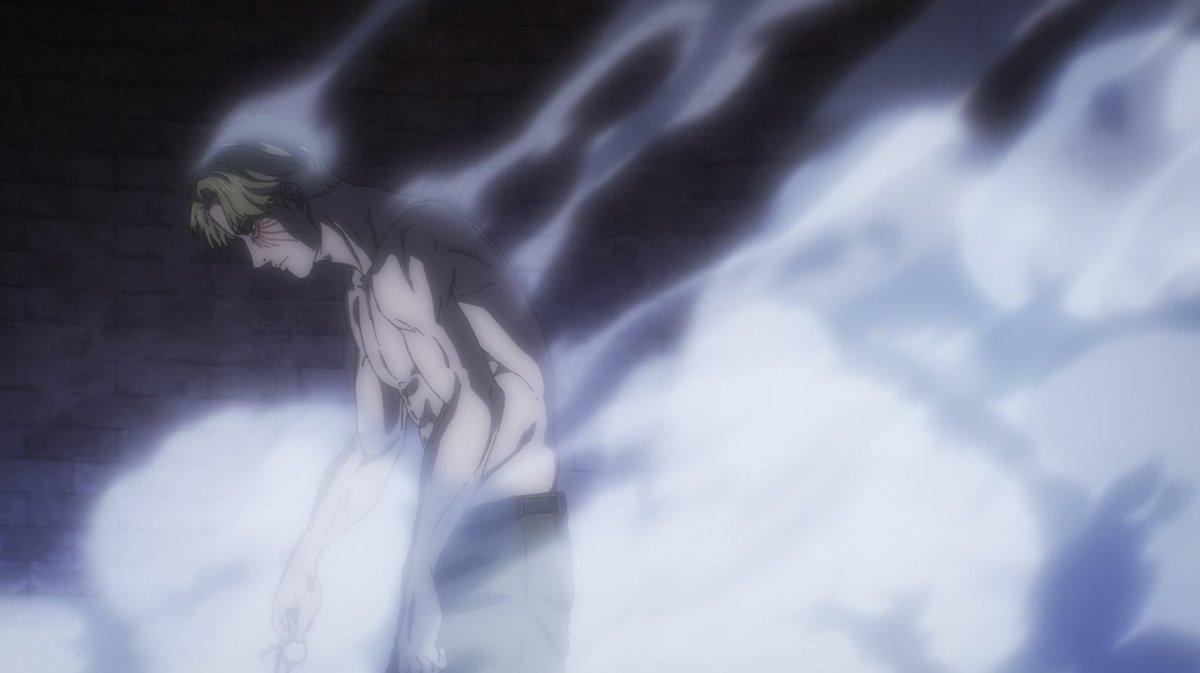
Zeke is Grisha's eldest son, Eren's half-brother, and the most intellectually constructed antagonist in the series. He leads Marley's warriors, holds the Beast Titan, and for much of the story seems to be operating several steps ahead of everyone else.
What defines Zeke is his philosophy — and the fact that it makes sense. The "Eldian euthanasia" plan, the idea that the solution to the cycle of violence is simply to stop having children, isn't the ravings of a generic villain. It's the logical conclusion of someone who looked at Eldian history, at the suffering passed down through generations, and decided the most merciful act was to end the cycle at the root. He's wrong. But the path he took to get there is coherent, and Isayama shows you every step — the childhood weaponized by his parents, the betrayal he committed to survive, the emptiness that remained. Zeke doesn't want power. He wants, in his own distorted way, to spare future generations from going through what he went through. He's the most tragic character in the series precisely because his logic is consistent and his conclusion is monstrous.
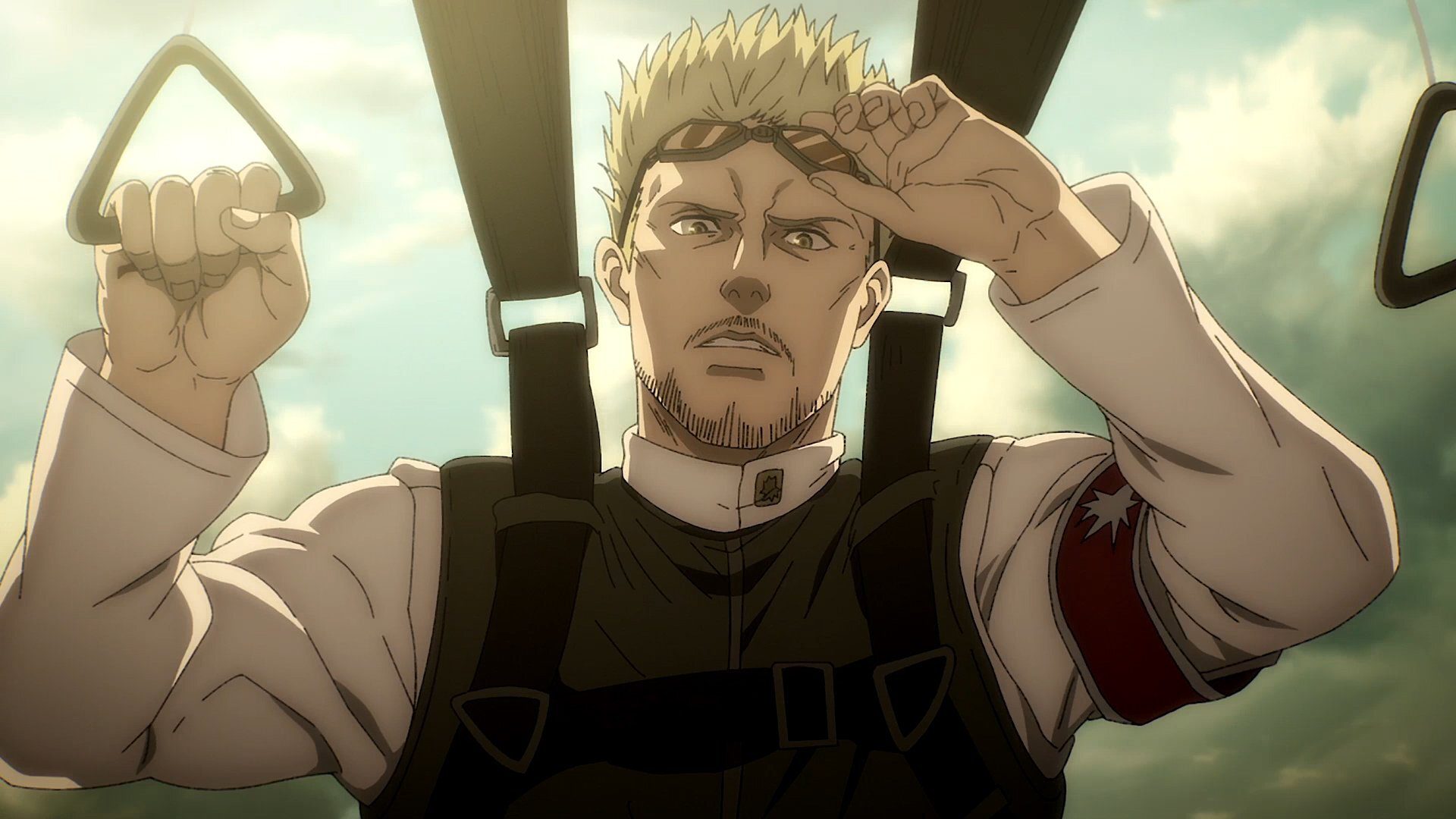
Reiner is the Armored Titan, one of the warriors responsible for the fall of Shiganshina. He's also the character with the most accurately portrayed psychological dissociation in any animated medium.
Reiner broke in half midway through the mission. Literally — he began alternating between two identities: the soldier following orders, and the comrade who genuinely cared about the people he was supposed to destroy. That's not hypocrisy. That's the defense mechanism of someone who couldn't carry what he was doing without splitting in two. What makes Reiner extraordinary is that Isayama uses him as a mirror for Eren, not a villain or a victim. Both made terrible choices out of loyalty to something larger than themselves. Both destroyed the lives of people they knew. Both carry it differently. The scene where Reiner asks Eren to kill him is one of the most honest moments in the series — not performed drama, just an exhausted man who simply can't go on.
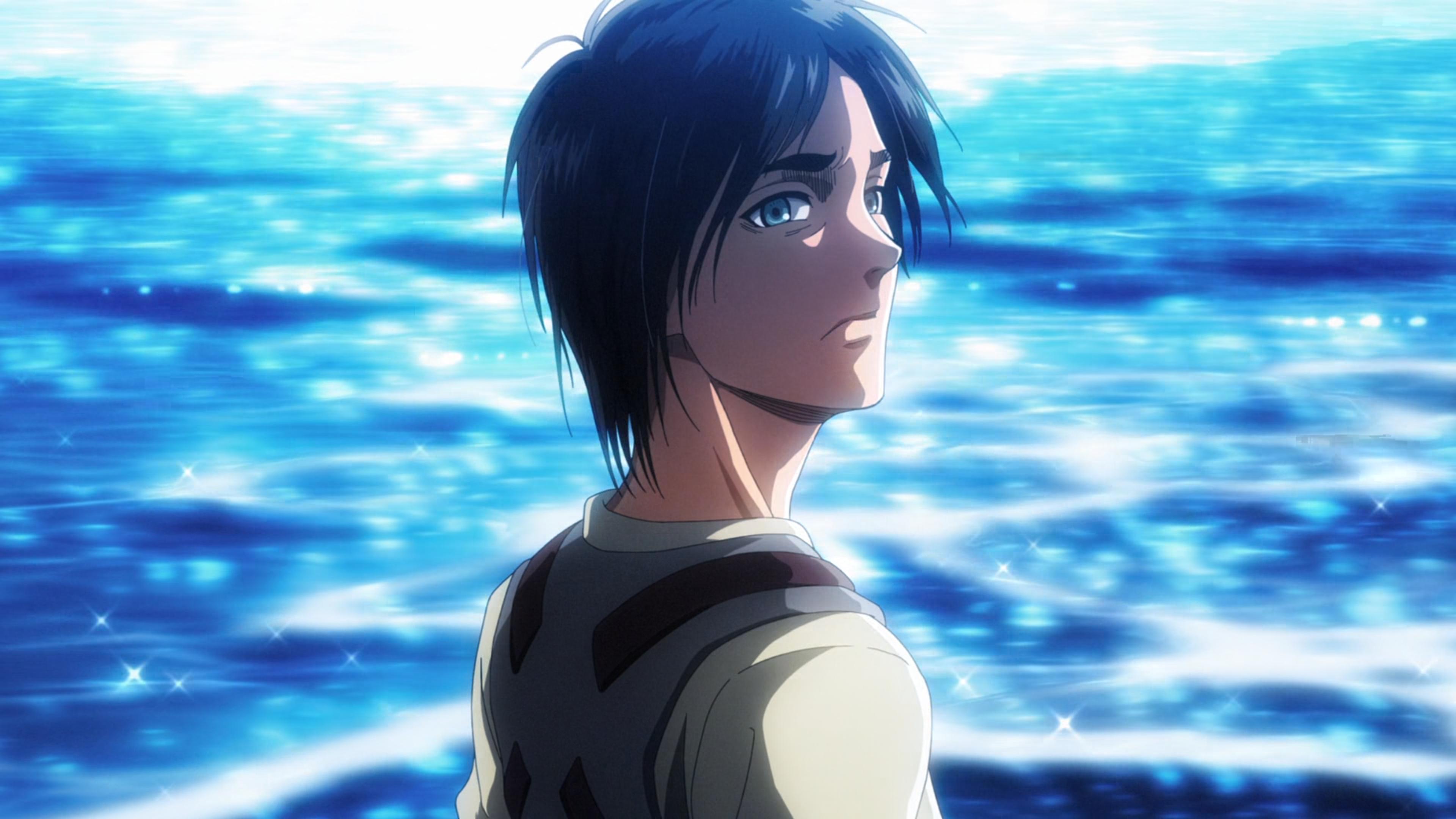
Eren starts as the most conventional protagonist imaginable — the angry kid who hates the world, determined to be free, willing to fight to the end. And that convention is exactly the weapon Isayama uses against you.
Over three seasons you build a relationship with Eren. You understand the rage, you share the drive, you justify the choices. And then the series turns around and shows you what you were supporting. The Rumbling — the genocide of 80% of the world's population — isn't a villain twist. It's the direct conclusion of everything Eren always was, followed to its logical end.
What makes Eren the best-written character in AoT isn't the arc itself — it's how Isayama manages the information. The retrospective of the final chapters reveals that Eren knew everything early on, that choices that seemed instinctive were calculated, that the boy you thought you understood was always operating with a layer of awareness that was deliberately hidden from you. Reread the series and every Eren scene shifts in meaning. That's rare craft — building a character who works perfectly in a linear reading and works in a completely different way on a reread. Eren isn't simply a protagonist who becomes an antagonist. He's the series asking you what exactly you were romanticizing from the beginning.