Best Written
Animanga
Antagonists
15 animanga antagonists ranked head-to-head on writing, not power or popularity: thematic function (how completely the villain embodies what the work is arguing about), coherent menace (whether their goals, methods, and psychology hold together and threaten without the plot bending to save them), and arc completeness (whether the writing takes them somewhere and earns it). Fight quality, power level, and fan-favourite status decided nothing. A beloved final boss ranks low if the writing is thin; an obscure schemer ranks high if the construction is airtight. Ranked head-to-head using Sortoff.
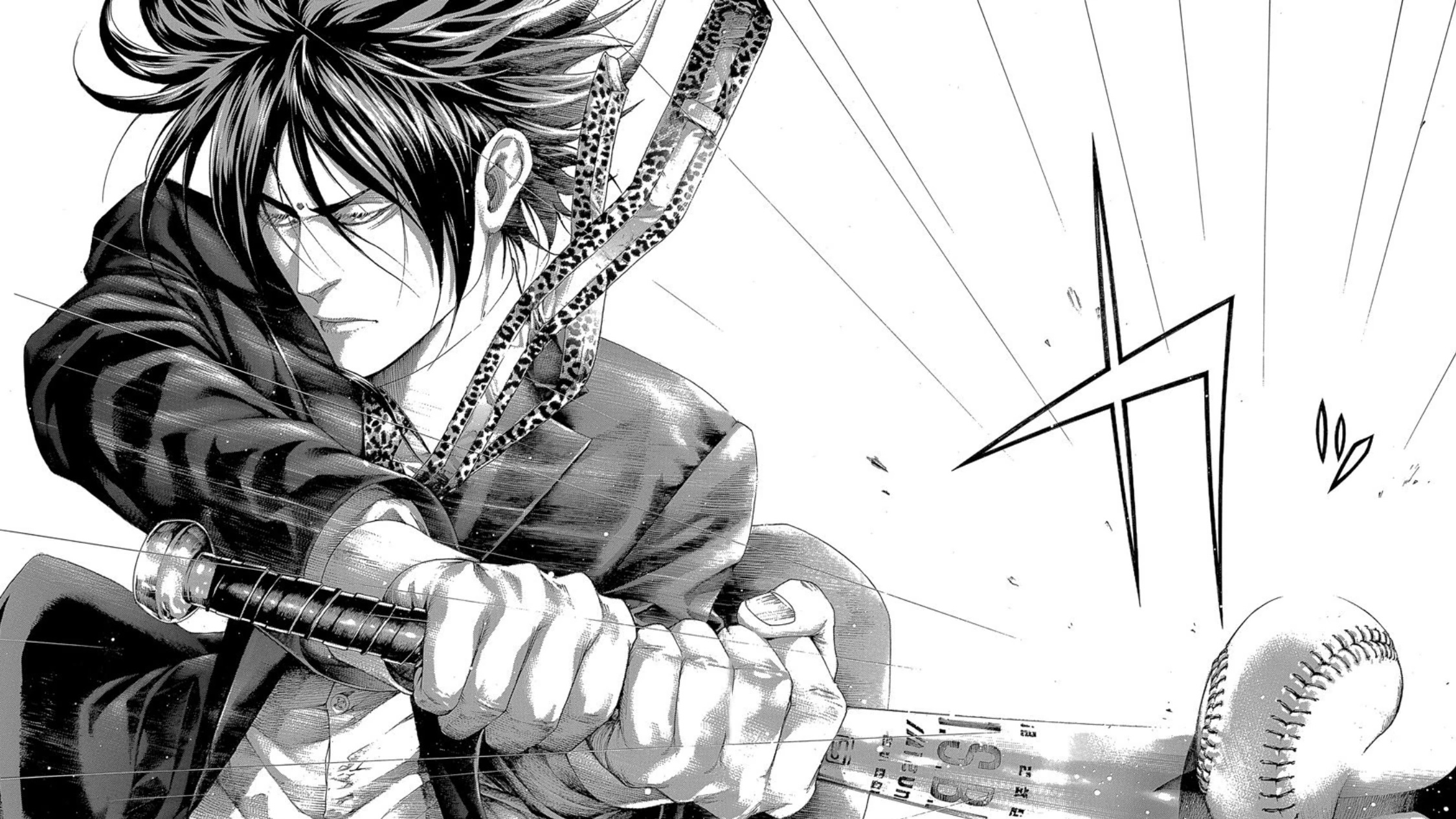
The presiding intelligence behind Kakerou, the underground death-game organisation of Usogui, and the referee-tyrant whose mind defines the ceiling every gambler in the series must reach for. He is the antagonist as pure adversarial intellect — a figure whose entire threat is that he has already thought further than anyone across the table.
He earns a place on the list on coherent menace taken to an extreme almost nothing else here attempts. Usogui builds its gambles so tightly that an antagonist's every read, trap, and counter has to survive obsessive logical scrutiny, and Souichi's do — his threat is entirely earned, never a cheat, never rescued by the author. What holds him at fifteen is the flip side of that strength: his writing lives almost entirely inside system mechanics rather than emotional interiority. You experience the machinery of his mind in exhaustive detail and his inner life almost not at all. It is sophisticated, complete, and cold — a perfect antagonist of strategy who reaches the ceiling of that mode without ever operating in another.
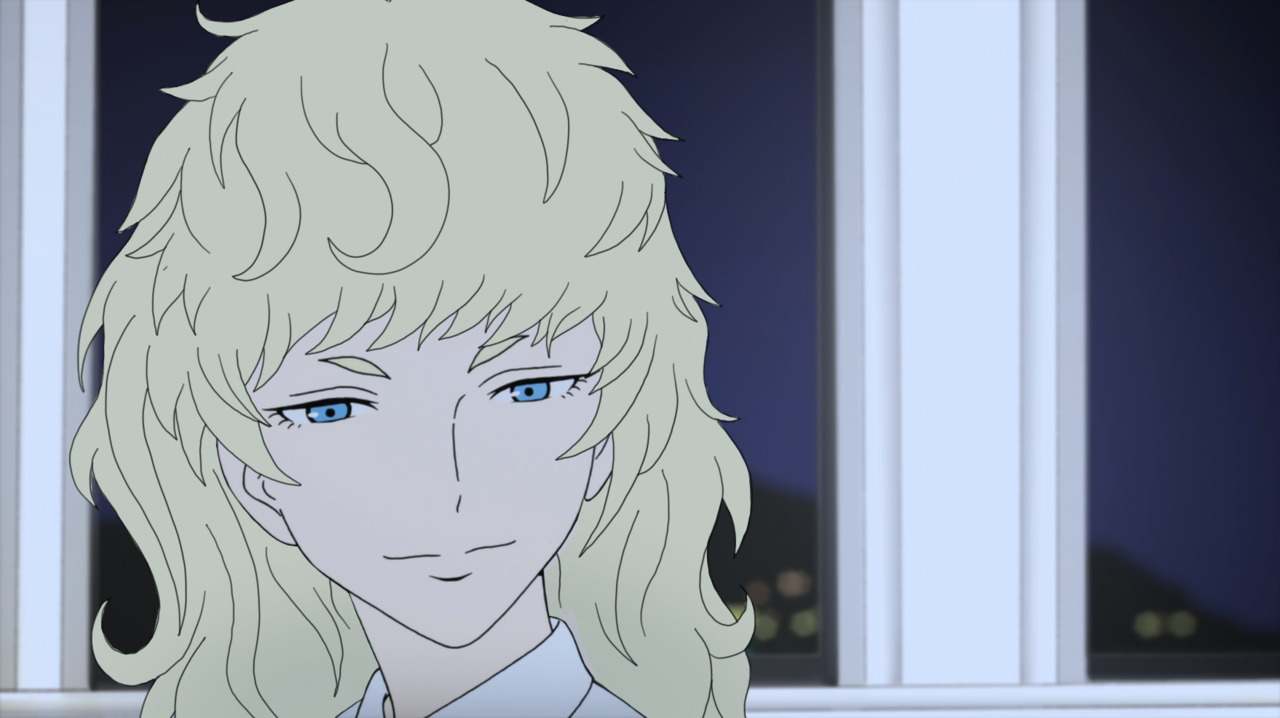
Akira Fudo's closest friend, the boy who hands him the power that makes him Devilman — and the figure whose true nature reframes the entire story once it surfaces. Ryo Asuka is the original version of a structure this medium has reused ever since: the intimate ally who is, all along, the adversary, and whose betrayal is not a plot turn but the story's thesis made flesh.
His placement is a placement on thematic function, where he is close to unmatched. Devilman's argument — that the true monstrousness is human, that fear and hatred destroy more surely than any demon — is delivered through Ryo, and the tragedy underneath his role gives it devastating weight. He is judged here on that writing, not on how much anyone discusses him now. What keeps him at fourteen is granularity: his characterisation is archetypal where the figures above him are psychologically specific, and the work's brevity — a handful of volumes — gives the devastation less room to accumulate than the longer arcs it helped inspire. Foundational, tragic, complete in outline; less textured, up close, than what sits above.
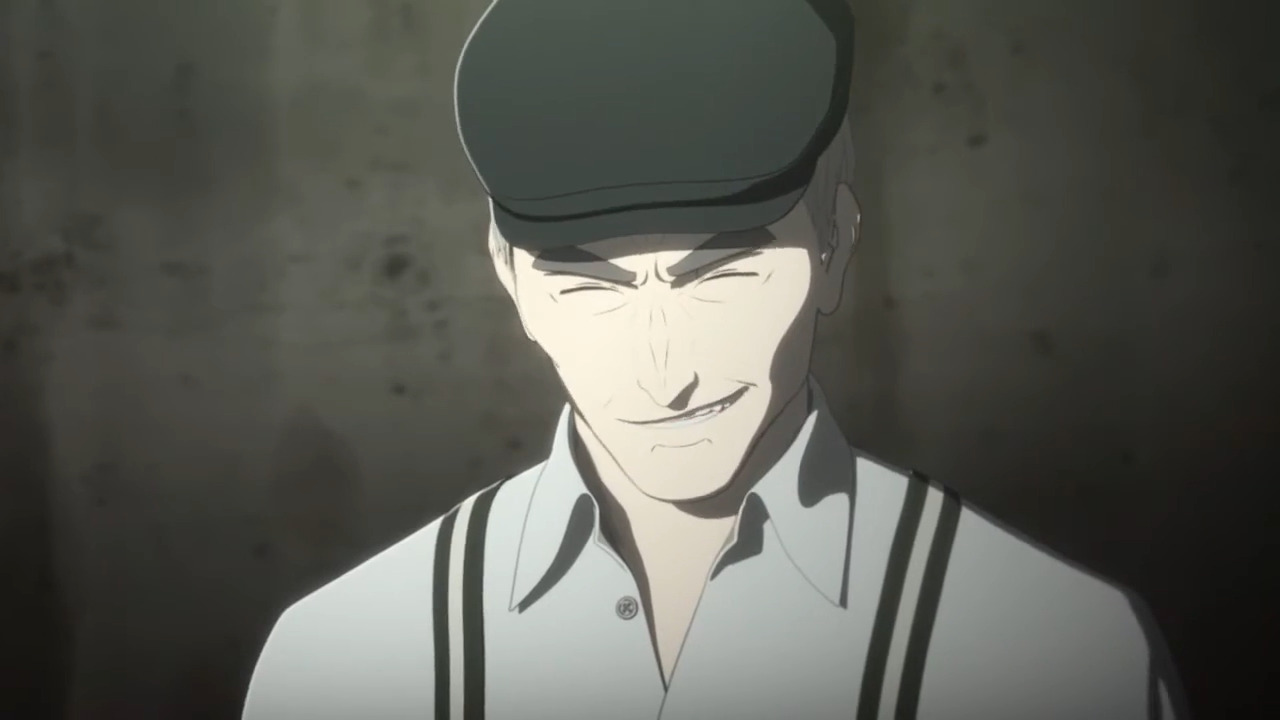
The affable, unkillable old man at the centre of Ajin's war between immortal demi-humans and the state that experiments on them — a grandfatherly presence who commits atrocities with the light, unhurried competence of a man doing a hobby he enjoys. Satou is the cleanest expression on this list of execution outscoring depth.
His strength is coherent menace in its most weaponised form. His immortality is treated as a genuine tactical problem, and Satou solves it with a ruthlessness the writing never fudges — no wasted motion, no overcomplication, every plan legible and lethal. He is frightening precisely because his simplicity is turned into a weapon. The ceiling is interiority, and it is a ceiling by design: once the reveal lands that he does this because he finds it fun, there is no further layer to uncover, no theme beyond the fact of him. He lacks the metaphysical reach of Kirei or Friend above him — but his functional perfection is undeniable, and it is enough to clear everyone below.
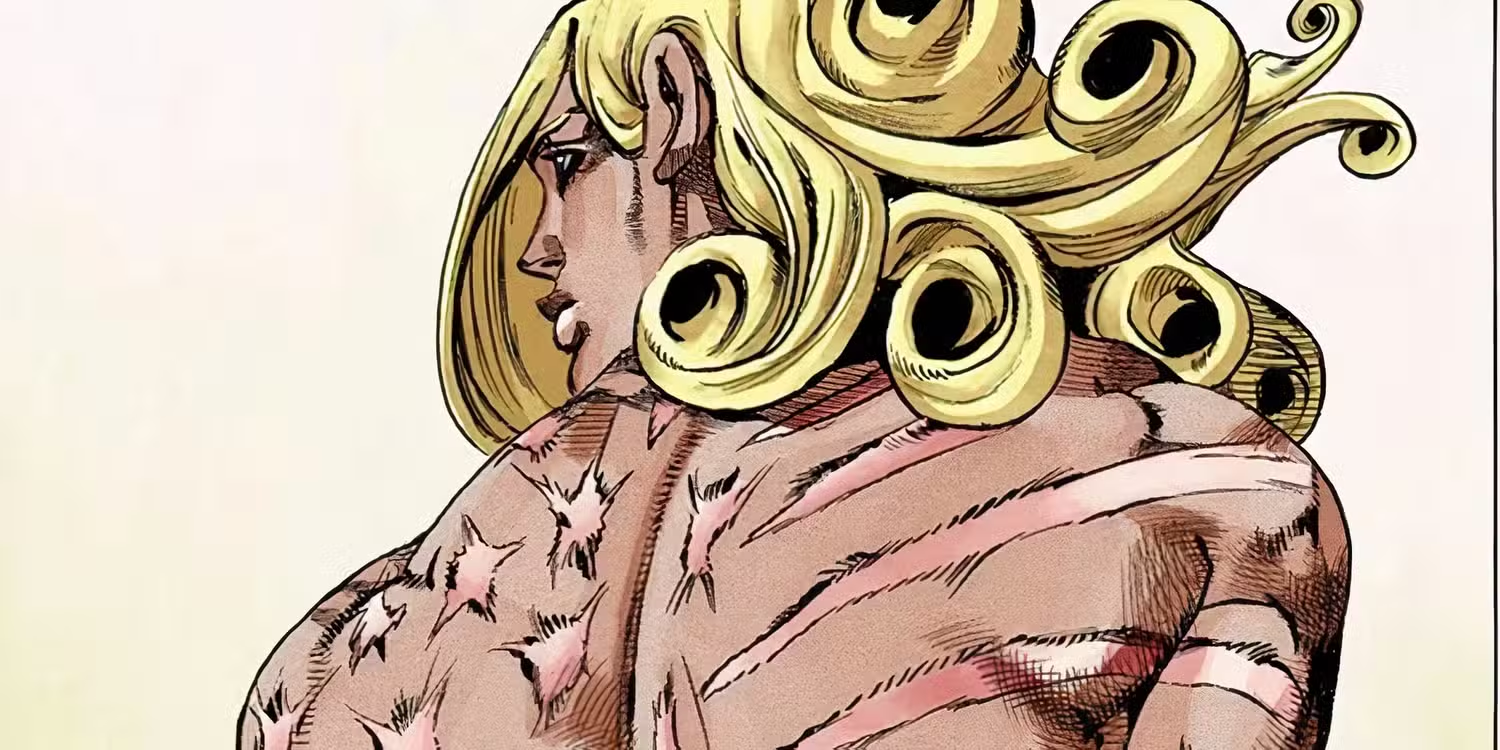
The 23rd President of the United States and the antagonist of Steel Ball Run: a patriot pursuing the Saint's Corpse to secure his nation's fortune at any moral cost, guided by a single, chillingly consistent creed — first the domestic tranquillity of his own country, whatever it demands of everyone else. Funny Valentine is JoJo's best-written villain because he is the rare ideologue who never once feels hypocritical.
He rates high on thematic function and near-perfect on coherent menace: every atrocity flows from a nationalism he genuinely believes is righteous, and the writing follows that logic without flinching or letting him cheat. He truly holds his monstrous utilitarianism to be justice, and that sincerity is what elevates him above villains who merely rationalise. What places him at twelve rather than higher is that his evil is abstract and political rather than personal — an argument given a body more than an interior given a voice. The figures above him internalise their darkness in a way Valentine, by design, projects outward onto a cause.
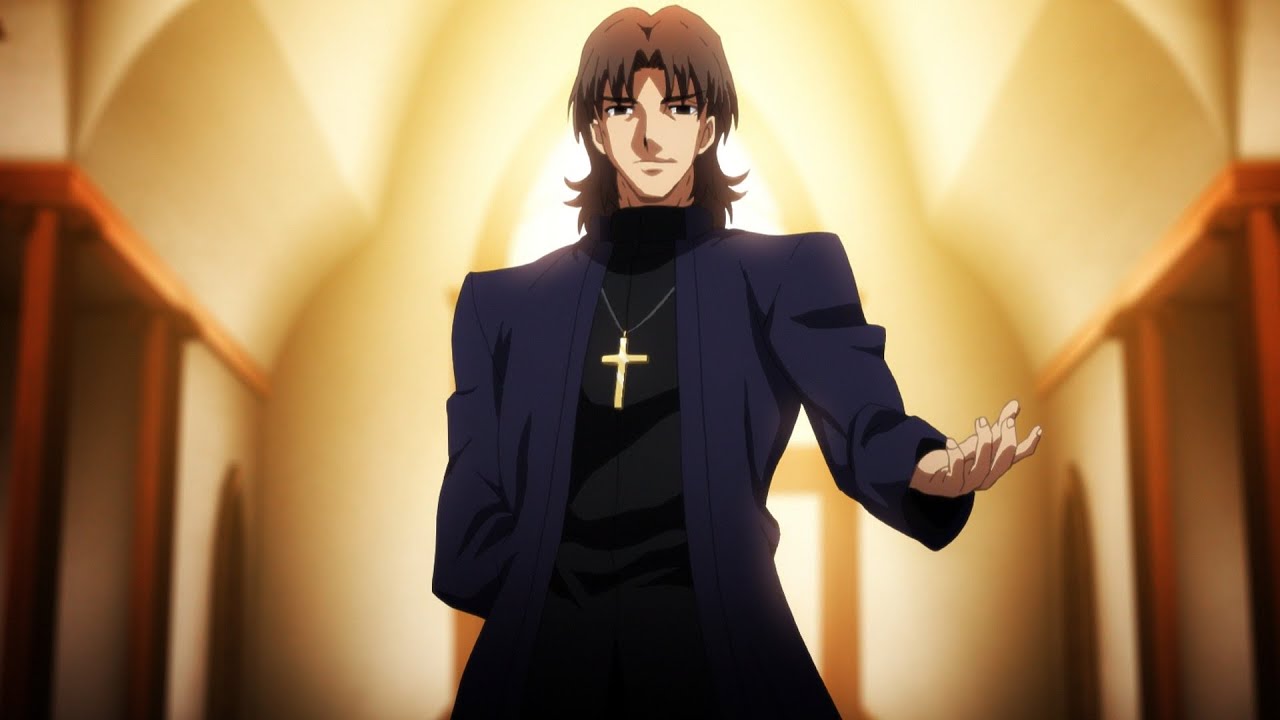
A priest and executor of the Holy Church, dispatched to oversee the Holy Grail War of Fate/Zero, who discovers across the course of it that the only thing that has ever made him feel alive is the suffering of others. Kirei Kotomine is one of the medium's richest studies of innate evil — not evil chosen, but evil found, at the bottom of a man honestly searching himself for anything else.
His depth is not merely philosophical but existential, and that is why he clears the villains below him. The premise the writing builds around him — what if your authentic self is fundamentally incompatible with morality, and every attempt to be good is a lie you tell to avoid looking at it — is one of the richest a villain can be handed, and Fate/Zero makes it the spine of his arc rather than a line of backstory. He functions as the dark mirror to Kiritsugu: two men who cannot be happy the ordinary way, arriving at opposite answers. Unlike Valentine below him, his evil is deeply internalised — investigated from the inside, in real time, by the man living it. That interiority is the exact thing the abstract ideologues lack, and it lifts him above them.
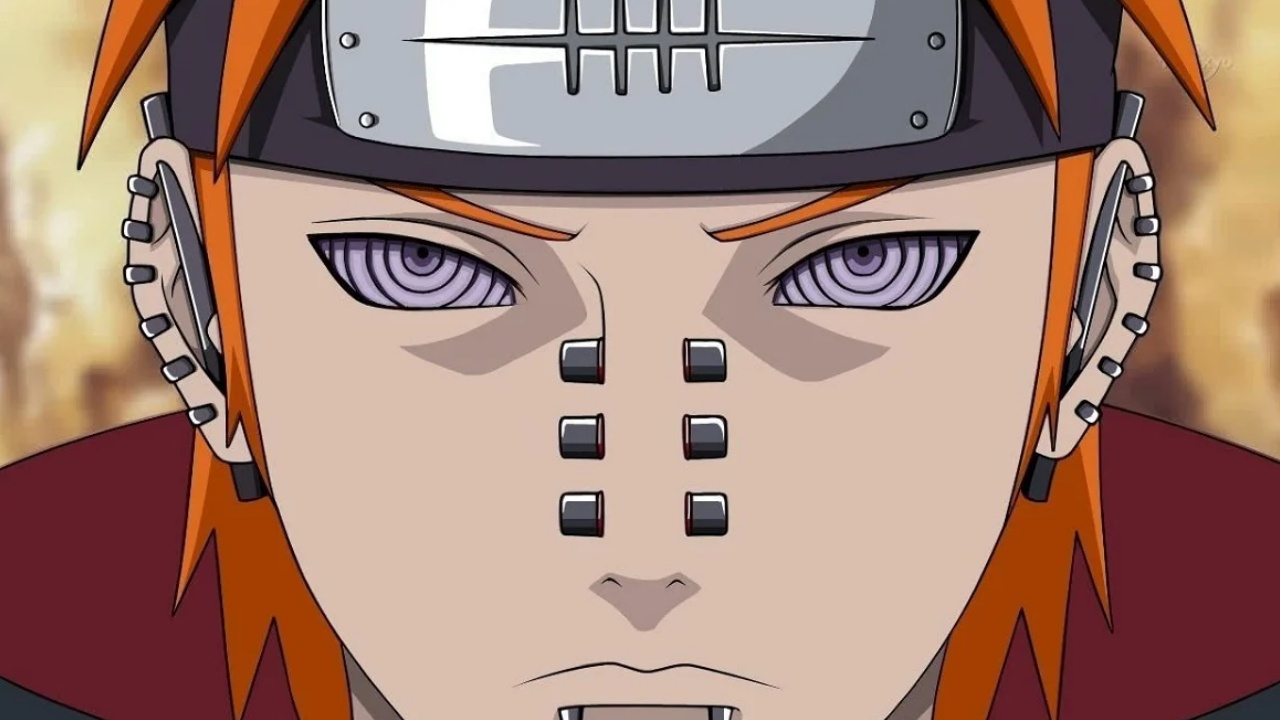
The leader of Akatsuki and the face of Naruto's central tragedy: a war orphan named Nagato whose losses convince him that only shared pain can teach humanity peace, acting through six reanimated bodies to force that lesson onto the world with apocalyptic force. Pain is the series' clearest thematic climax, the point where its long argument about the cycle of hatred finally has a face to answer.
His writing works because the chain is airtight: his trauma produces his philosophy, his philosophy produces his methods, and his methods challenge the protagonist's worldview directly rather than incidentally. Naruto's response to Pain is the moral centre of the entire series — the cycle-of-hatred thesis stated by the villain and rebutted by the hero on equal terms. That is thematic function operating at its highest level in shonen. The one real flaw is the resolution: the mass revival that follows resolves the weight of what he has done faster than the story earned, softening the final impact of a villain whose construction, up to that point, is close to flawless. The ending dents the payoff, not the architecture — and the architecture is why he ranks this high.
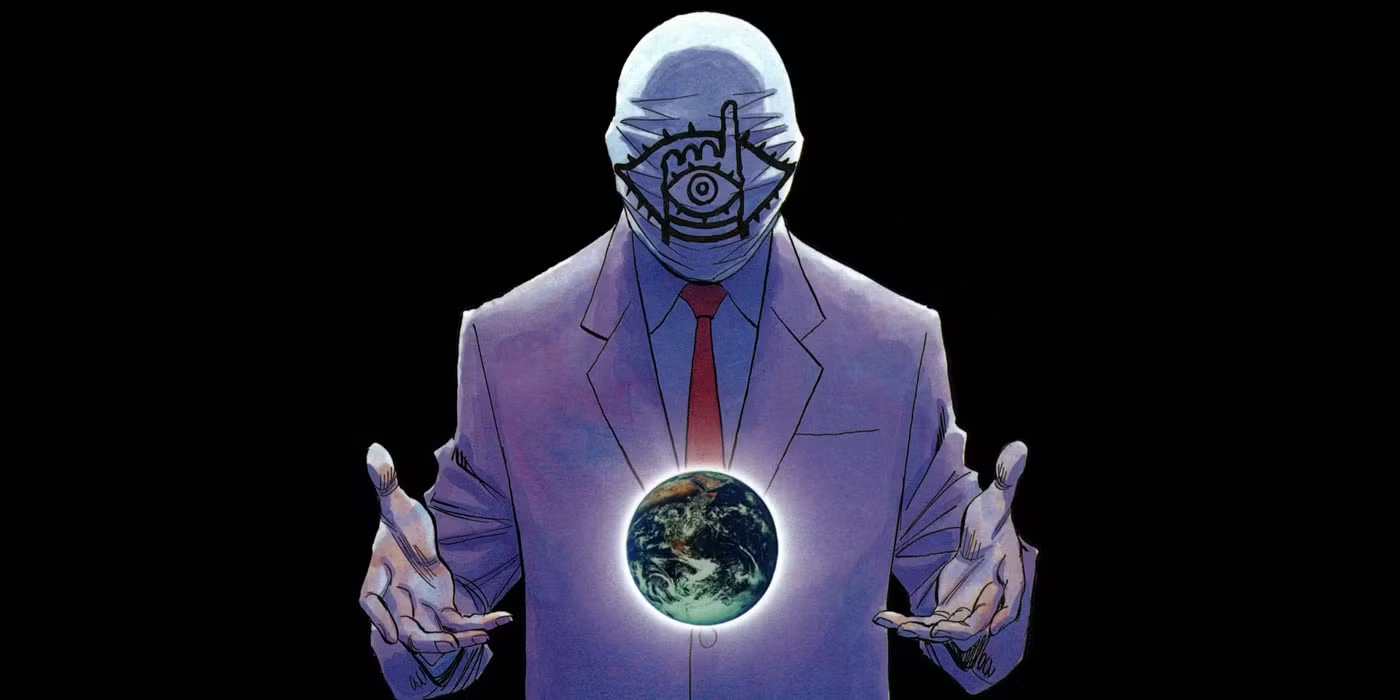
The masked figure at the heart of Naoki Urasawa's 20th Century Boys: a cult leader and eventual would-be god whose entire apocalyptic scheme is built from a childhood the protagonists half-remember and cannot place. Friend is one of the most structurally ambitious antagonists ever attempted — a villain whose identity is the mystery, and whose mystery is the theme.
What makes him exceptional is that he is inseparable from what the manga is about: childhood myth, loneliness, the machinery of mass psychology, and the way inherited fear metastasises into belief. He functions almost like a disease spreading through a society — less a man than a condition the world catches. That structural achievement is enormous, and it is why he ranks above the shonen ideologues below him. His limitation is the one both of his fiercest readers land on: late-stage convolution. The reveal machinery becomes so elaborate that function begins to outrun interiority — you admire the architecture more than you inhabit the person inside it. A towering construction, ranked here on the strength of what it builds rather than who it lets you know.
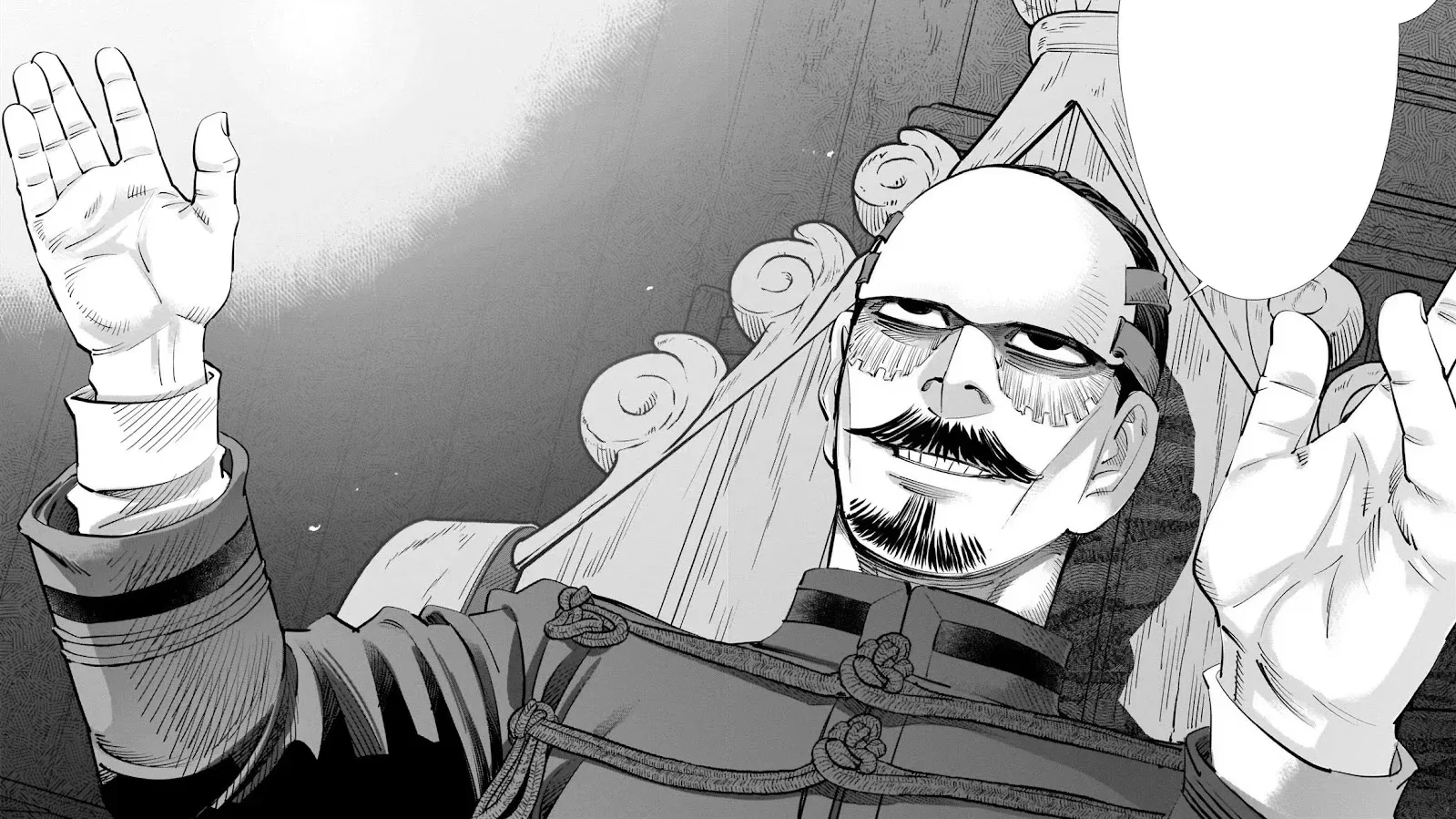
A lieutenant of the Imperial Japanese Army and the principal schemer of Golden Kamuy's race for a hidden fortune in Hokkaido: a charismatic, theatrical commander with a piece of his skull missing, who leaks his own brain fluid when excited and commands ferocious loyalty from men who would follow him into any atrocity. Tokushiro Tsurumi pulls off the hardest thing a villain can attempt — contradiction without incoherence.
He is grotesque and charismatic, absurd and terrifying, manipulative and genuinely affectionate, theatrical and psychologically grounded — and he sustains every one of those incompatible modes across a massive runtime without any of them collapsing into the others. Most great villains master a single register; Tsurumi holds four at once for hundreds of chapters, and the black comedy never undercuts the grief buried underneath it, nor the grief the comedy. His writing is less symbolic than Friend's below him — he is not the theme of his story made flesh — but he is far more alive, a fully inhabited person where the villains beneath him are, to varying degrees, arguments. That density of coherent contradiction is the rarest craft on this list, and it earns him the highest place below the settled top seven.
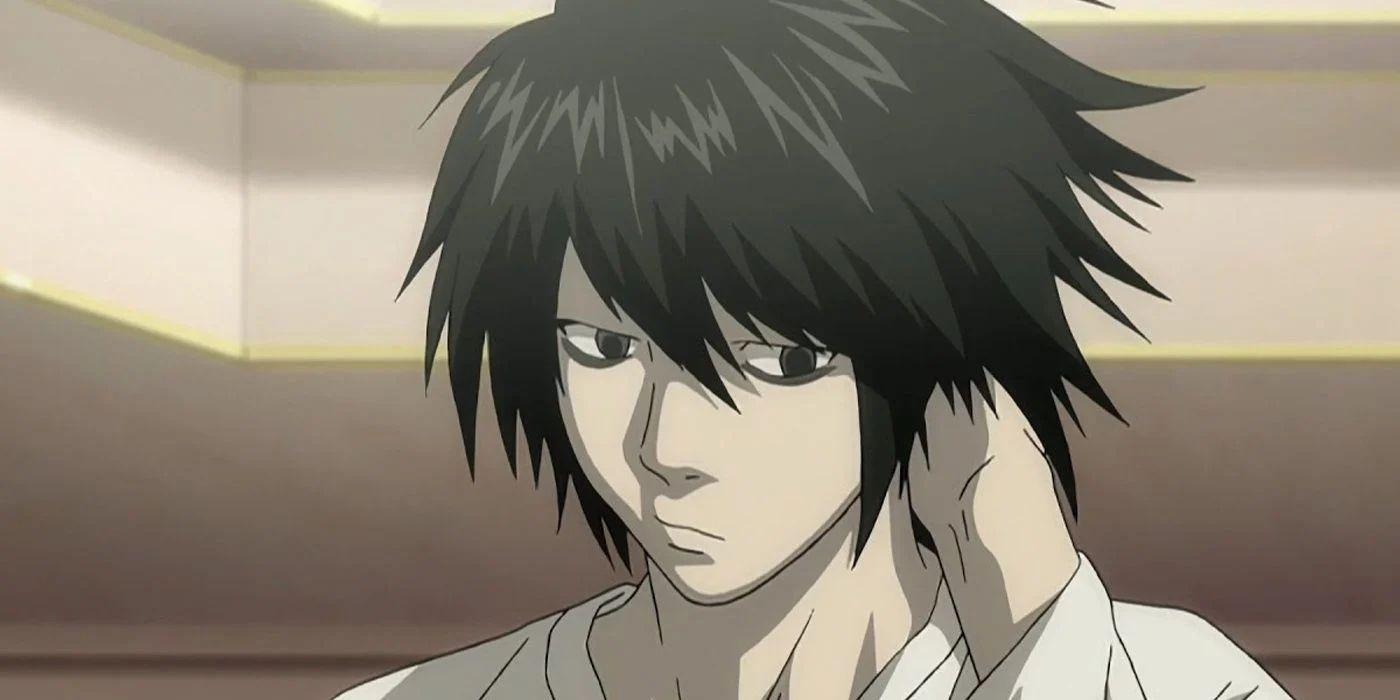
The world's greatest detective, a hunched, sweet-toothed recluse who takes the Kira case as a personal duel and becomes the one mind capable of cornering Light Yagami. Seen from the protagonist's chair — which is where Death Note puts us — L Lawliet is the antagonist: the brilliant, obsessive adversary standing between Light and the world he means to remake.
He is elite on coherent menace, which for L is entirely intellectual. His threat is pure deduction, and the writing holds every step of it to scrutiny — each trap, bluff, and inference is legible and earned, and he never once corners Light by authorial fiat. The cat-and-mouse is as tight as the medium has produced. He is also the story's counter-thesis given a body: the argument that no individual, however certain, has the right to appoint himself the world's judge, which gives Death Note's moral debate its second side. What holds him at seven is depth and duration: his brilliance is procedural more than moral — dazzling problem-solving rather than an interrogated interior — and his arc is cut short rather than completed, an escalating duel that ends before it can transform him. Iconic execution, capped by a canvas the story closes early.
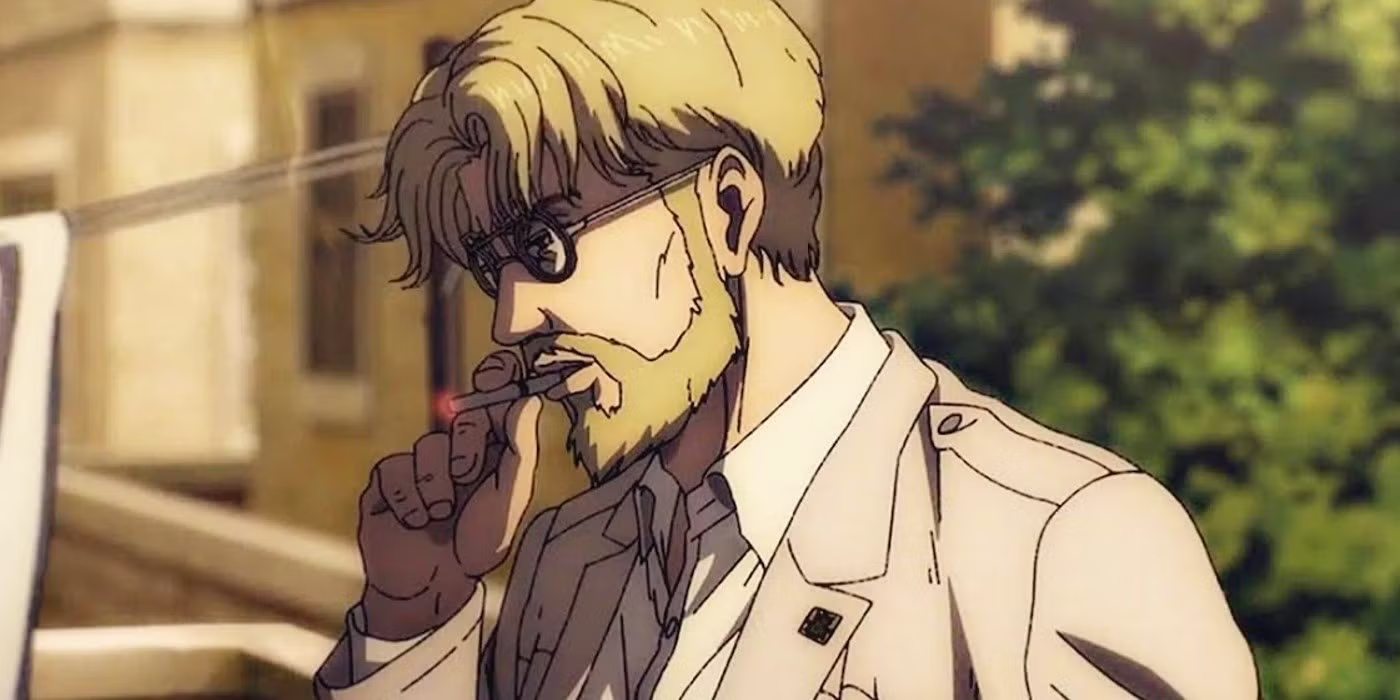
The Beast Titan, Marley's greatest warrior, and Eren's older half-brother: a man who concludes, from a childhood poisoned by his parents' nationalism, that the most merciful thing that could happen to his people is for them to stop being born at all. Zeke Yeager is Attack on Titan's richest ideological antagonist — the euthanasia plan is one of the most genuinely uncomfortable positions the medium has handed a villain, because the story refuses to make it stupid.
He rates highly on thematic function: Zeke is the fullest embodiment of the cycle-of-hatred question the series is built around, a man whose monstrous solution is legible as love twisted by despair rather than mere cruelty. His childhood, his bond with Ksaver, his willingness to spend his own life on the plan — the interiority is there and it is bleak and specific. What holds him a notch below Reiner is coherence in the back half: the late-story mechanics of Paths, the Founder, and the shifting terms of his plan muddy his motivations at exactly the point they should sharpen, and the writing loses some of its grip on precisely what he wants and why. A superb ideological device, slightly blurred by the machinery it ends up operating inside.
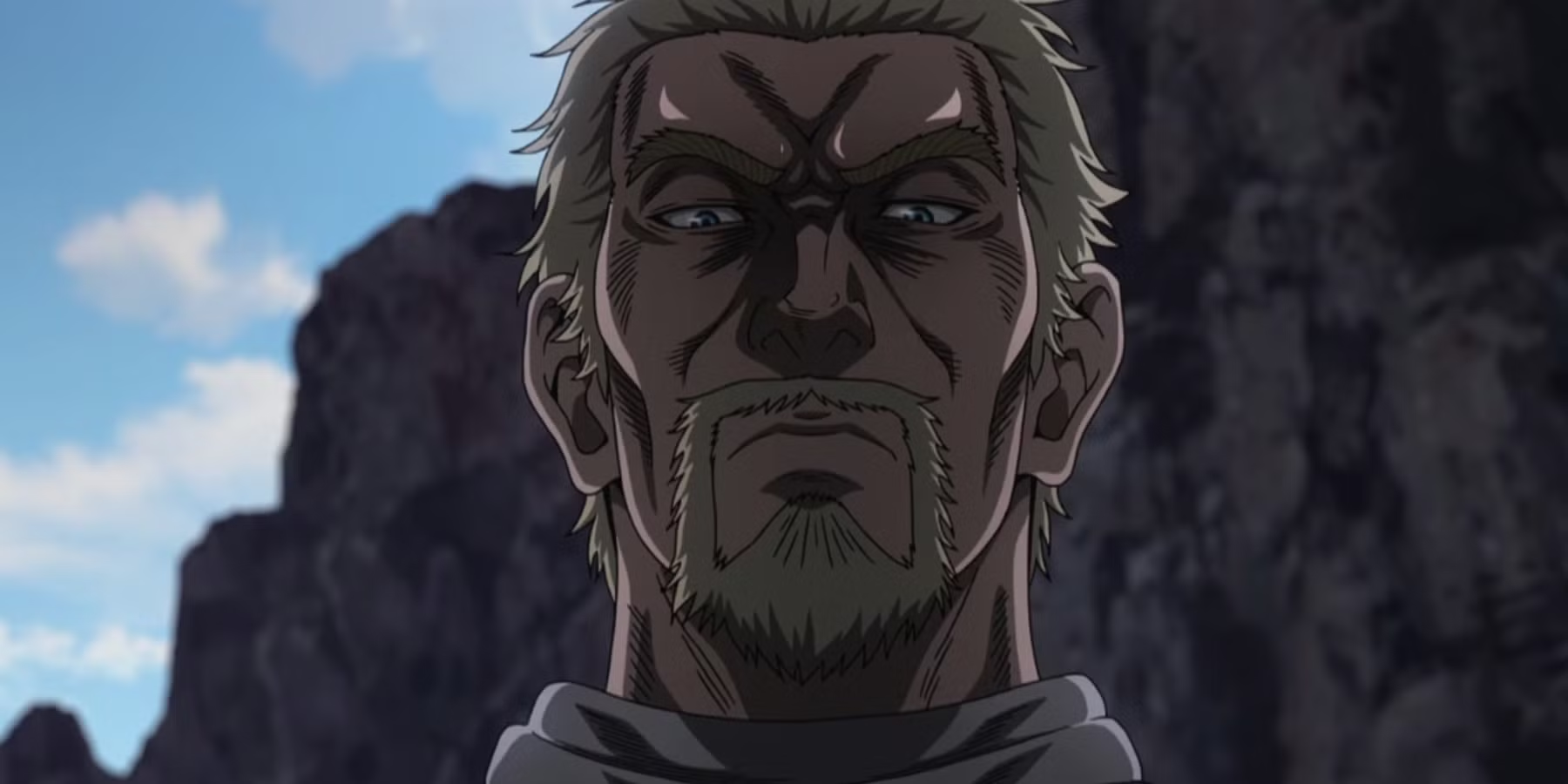
The cunning half-Danish, half-Welsh mercenary captain who murders Thors and becomes, across the whole of Vinland Saga's first arc, the story's most compelling mind and its unlikely moral fulcrum. Askeladd is a villain by role and a tragic figure by writing — the man whose death Thorfinn spends the arc pursuing, and whose loss reshapes the entire series.
He excels on thematic function and arc completeness at once. His buried reverence for a lost, gentler Britannia — the dream of a land beyond the endless killing — gives Vinland Saga's brutality its ache, and it makes him the secret carrier of the theme the series will spend its second half chasing. His logic is impeccable: a schemer whose every move is legible in hindsight, never rescued by convenience, and his final act reframes a hundred chapters of scheming into a single deliberate sacrifice that lands with the force of everything it completes. He ranks fifth rather than higher because his greatness is arc-and-theme; as raw menace he is, by design, more architect than monster — the villains above him unsettle in a way Askeladd, who becomes half-mentor before the end, was never built to.
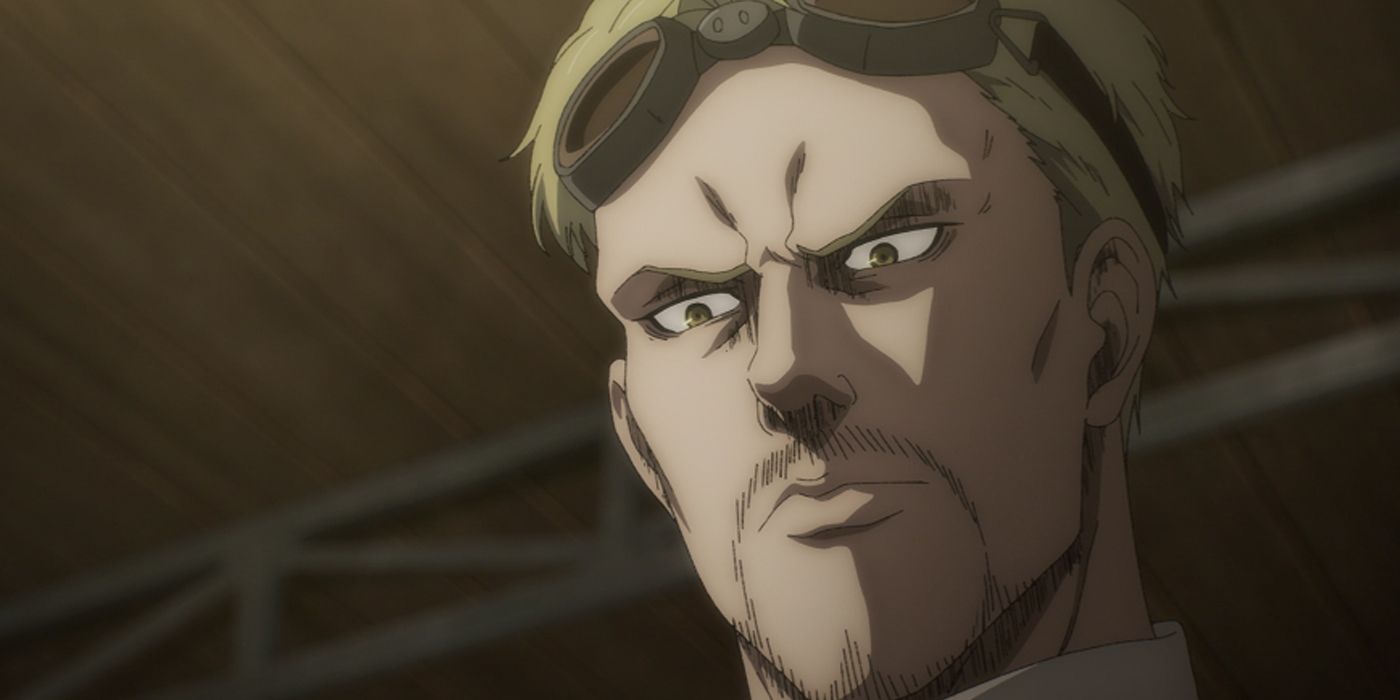
The Armored Titan, and for the first half of Attack on Titan the enemy hiding in plain sight — a warrior sent as a child to infiltrate the very people he was raised to destroy, who spends years living among them until he can no longer tell which self is the lie. Reiner Braun is the series' most sustained piece of psychological damage, and the antagonist with the most material worked into him of anyone below the top three.
His placement rests on arc completeness and the sheer duration of the writing's commitment to him. The dissociation — the mind that splits itself into soldier and warrior because no single person could carry both the guilt and the mission — is developed across nearly the entire series rather than delivered in a single reveal, and it curdles into one of the medium's most harrowing portraits of a man kept alive by a purpose he no longer believes in. He is an antagonist whose menace and whose suffering are the same thing, tracked with a patience almost nothing else here matches. What holds him at four rather than higher is scope of function: his devastation is intensely personal where the three above him carry, in addition, the full thematic weight of their stories. Reiner is the most complete character low on this list; the top three are that and the argument of the work besides.
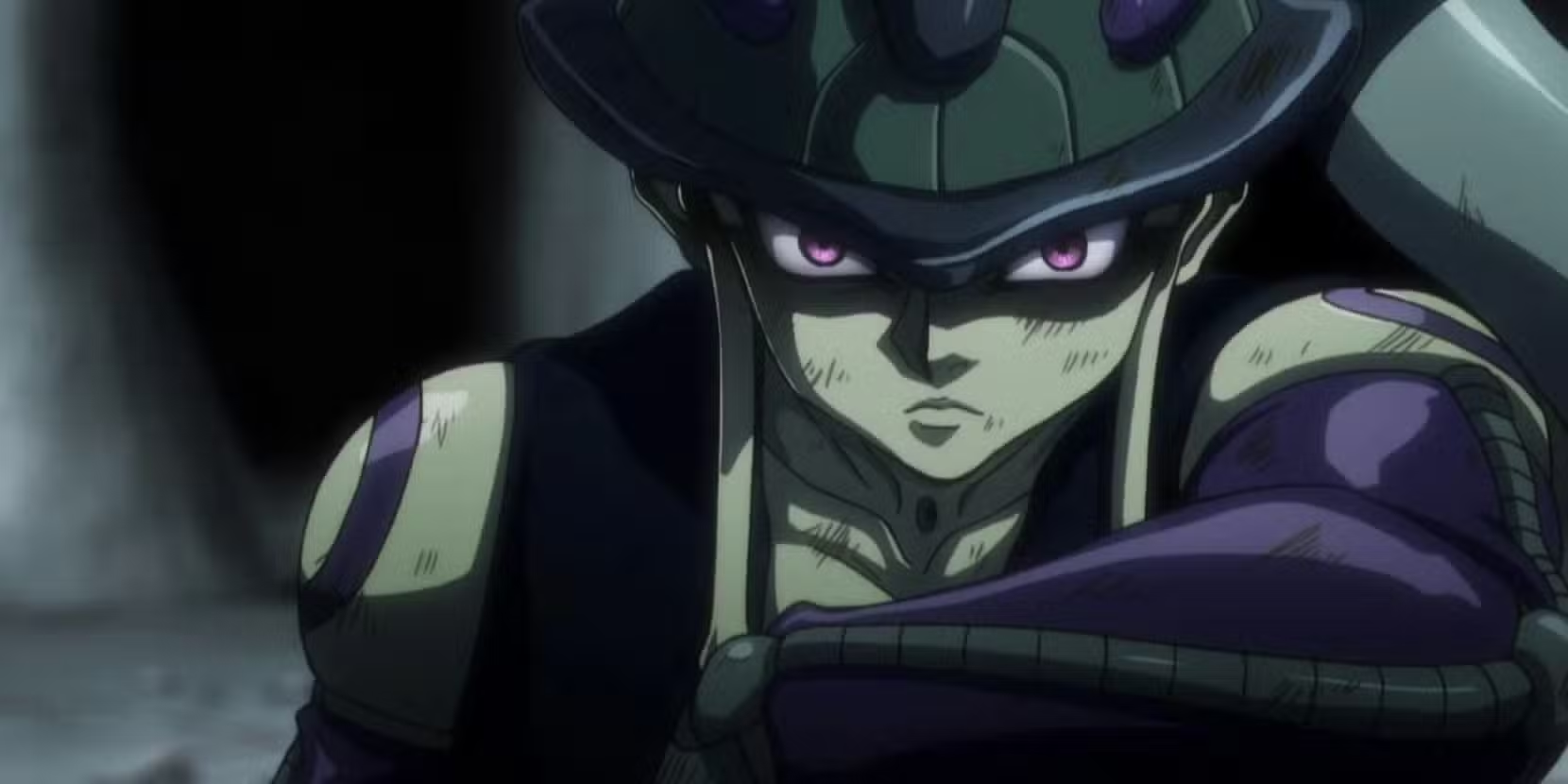
The Chimera Ant King of Hunter × Hunter: born as the apex of a species engineered by nature to devour humanity, arriving in the world as an extinction-level being with absolute contempt for all lesser life. Meruem is the ultimate threat given a mind — and then the writing does the thing almost no shonen antagonist is allowed: it lets him become a person.
His third-place standing rests on arc completeness, and specifically on the cleanest, most complete transformation on this list — zero wasted chapters. Through the game of Gungi and his bond with the blind girl Komugi, Meruem is gradually and credibly humanised, not softened by authorial mercy but educated into personhood, until the King who began as a monster ends capable of love and grief. The final chapters, as he chooses how to spend the last of his life, are among the most affecting the medium has produced. He ranks below the top two only because his early menace, immense as it is, is briefly a more conventional apex-predator threat before the writing transcends it — the ascent is unmatched, the starting point a half-step less singular than the two figures whose menace and meaning were extraordinary from the first page.
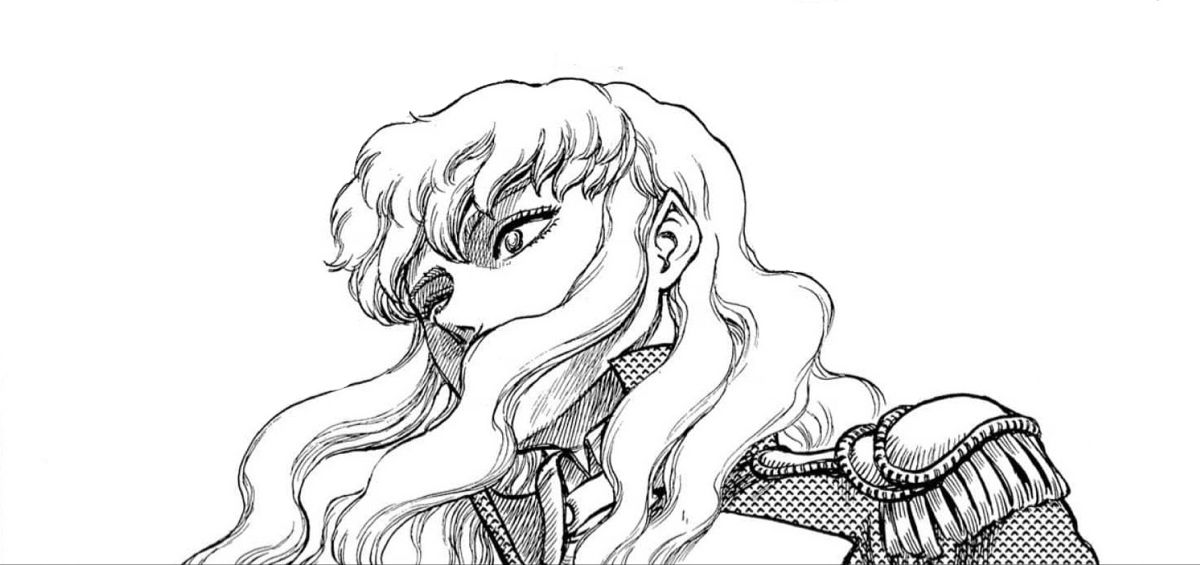
The luminous mercenary commander of the Band of the Hawk, whose ambition to possess a kingdom of his own curdles, in a single night of despair, into the demon-god Femto. Griffith begins as the most radiant figure in Berserk and ends as its greatest horror — and the transformation is neither a betrayal of the writing nor shock for its own sake, but the inevitable terminus of everything he already was.
He is as tight a tragedy as the medium has produced. Thematically he is Berserk's central argument made flesh — the collision between an individual dream and human bond, between causality and agency — and the Eclipse is that thesis stated in blood. His logic is horrifying and airtight: every atrocity proceeds from the same wound and the same appetite, never from convenience, so that his monstrous rebirth reads as fate rather than plot. He ranks second, a hair below Johan, for a specific reason: post-Eclipse, Griffith trades interiority for symbolism — Femto is magnificent as an idea but less inhabited as a mind than the man who became him, and the writing after the transformation operates more on meaning than on the intimate psychology that made the fall unbearable. The greatest tragic arc on the list; edged only by a villain who never once loosens his grip on the reader.
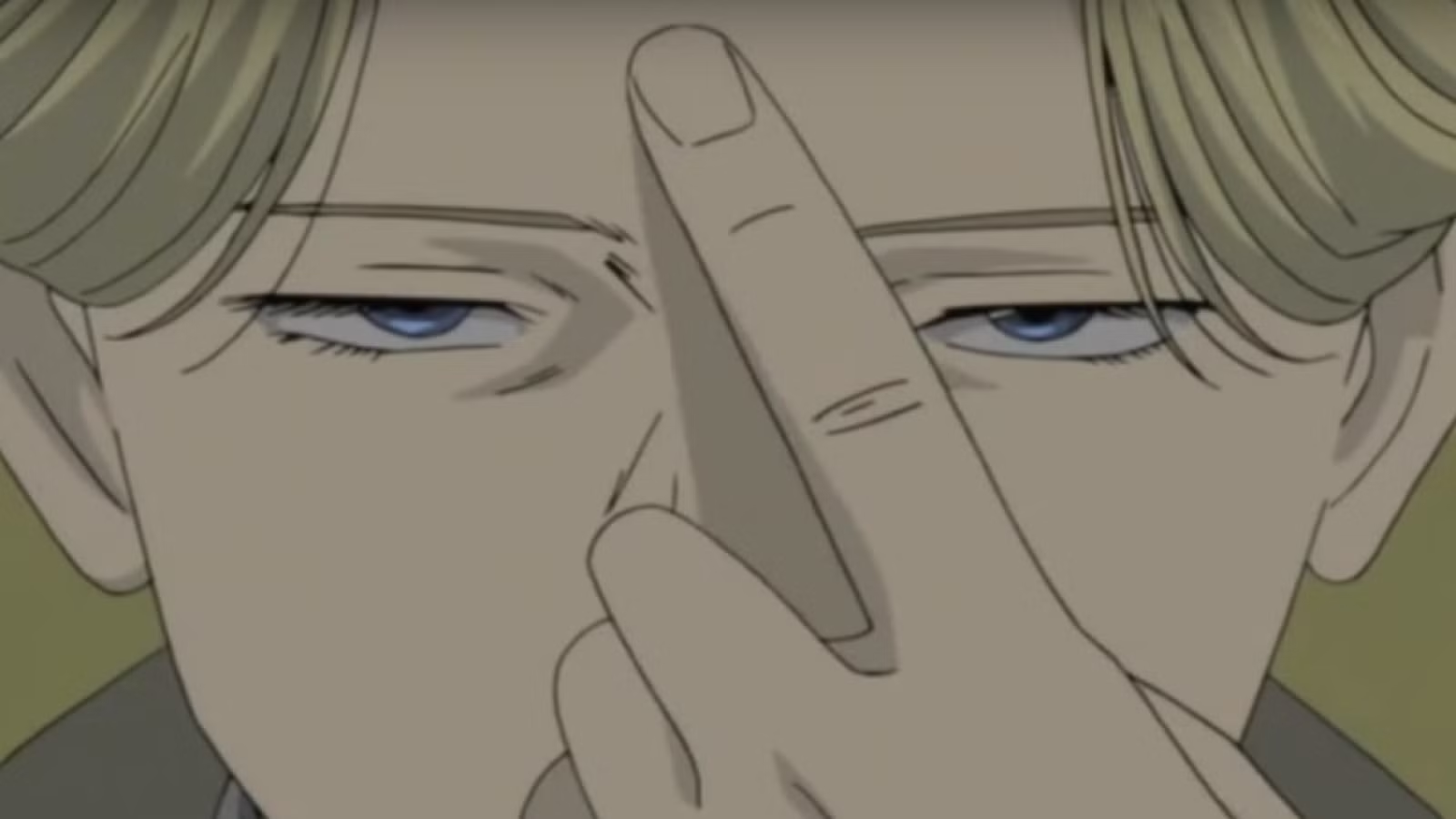
The quiet centre of Naoki Urasawa's Monster: a beautiful, soft-spoken young man who is also an engine of annihilation, moving through post-Cold War Europe and leaving suicides and massacres in his wake for reasons that unspool like a slow poison. Johan Liebert has no powers, no army, and no theatrics — only intelligence, patience, and an absolute void where a conscience should be — and he is the best-written antagonist the medium has produced.
What earns him first is that he achieves something nothing else here attempts: he carries the entire story while barely appearing in it. For sixty volumes he is mostly an absence — a rumour, an aftermath, a name spoken by the terrified — and the writing sustains total menace through that absence without a single cheat. His coherent menace is airtight: every horror he authors follows from one terrifying premise about human worthlessness, and Urasawa never once bends the plot to save or corner him. His thematic function is the deepest here, too — he is the question the whole work is built to ask, whether evil is made or born, held open and never answered cheaply. The one thing he does not have is transformation: Johan ends roughly as he began, an arc of revelation rather than change. But that stillness is the point — a void does not develop, it is only gradually, unbearably seen — and it is the sole reason the conversation for first place exists at all. Nothing else on this list does more with less, or holds the reader in its grip so completely while remaining, to the end, offstage.
Bondrewd · Manabu Itoh · Shogo Makishima · Gendo Ikari · Itachi Uchiha · Nimura Furuta